Overview
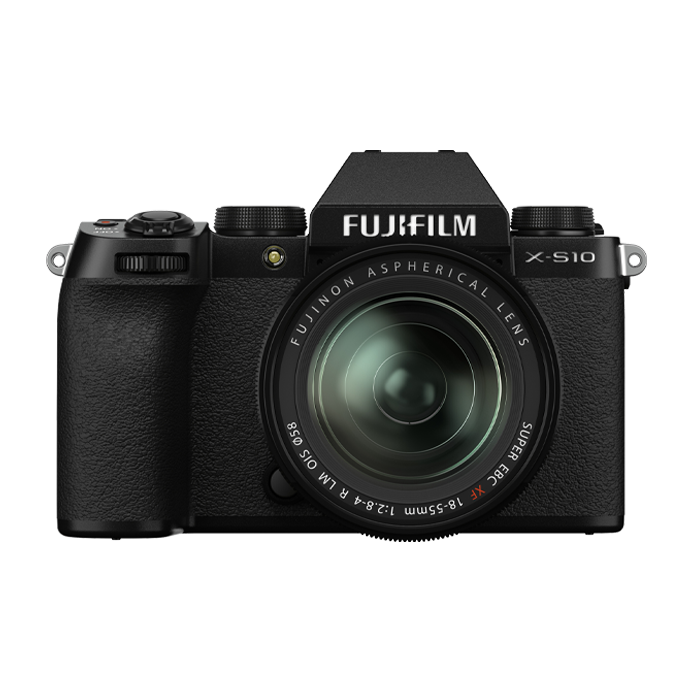
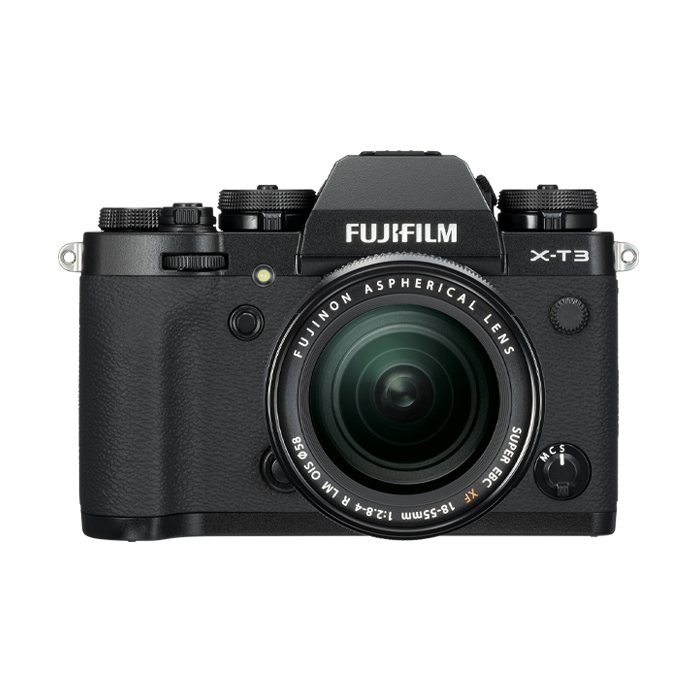
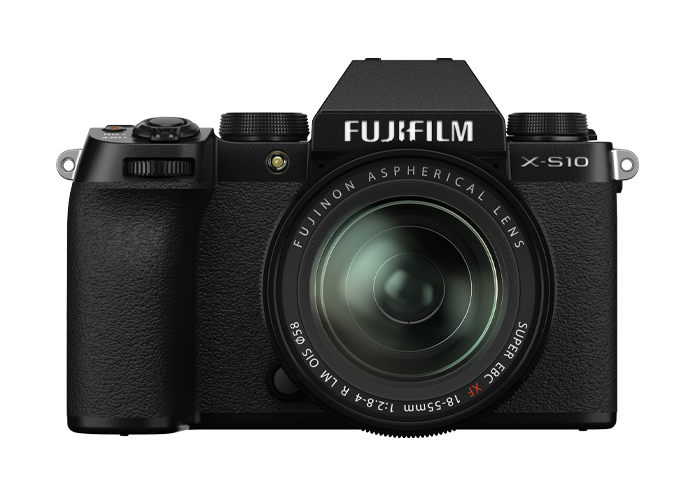
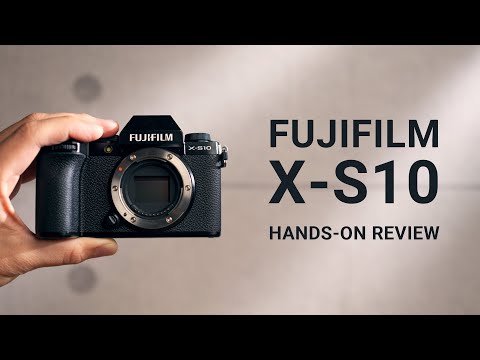
The Fujifilm X-S10 is a versatile APS-C mirrorless camera designed for photographers and content creators who want excellent image quality, effective in-body image stabilization, and accessible controls in a relatively compact body. Unlike Fujifilm's traditional X-T series, which emphasizes dedicated analog-style shutter speed and ISO dials, the X-S10 uses a conventional PASM mode dial familiar to users transitioning from Canon, Nikon, or Sony cameras.
The X-S10 features a 26.1MP X-Trans CMOS 4 sensor and X-Processor 4 image processor, the same core imaging combination found in the Fujifilm X-T4. This pairing delivers detailed photographs, attractive color reproduction, and access to Fujifilm's popular Film Simulation modes. Its five-axis in-body image stabilization helps reduce camera shake for handheld photography and video recording.
For video creators, the X-S10 offers detailed 4K recording at up to 30 frames per second, a fully articulating touchscreen, and external microphone and HDMI connectivity. Its deep handgrip provides a comfortable hold despite the camera's relatively lightweight body, making it suitable for travel, family photography, street photography, and everyday content creation.
However, the X-S10 makes several compromises to achieve its size and price. It lacks official weather sealing, has only one UHS-I SD card slot, and uses the smaller NP-W126S battery. Its autofocus system performs well for many everyday subjects, but photographers who regularly track fast-moving wildlife or sports may prefer a newer camera with more advanced subject recognition.
Key Specifications and Features
26.1MP X-Trans CMOS 4 Sensor
The X-S10 uses a 26.1MP APS-C X-Trans CMOS 4 sensor paired with Fujifilm's X-Processor 4. This combination produces detailed images with appealing color reproduction, good dynamic range, and useful high-ISO performance. Because it shares its core sensor and processor with the X-T4, the X-S10 can deliver a comparable level of image quality under similar shooting conditions.
Five-Axis In-Body Image Stabilization
One of the X-S10's most important features is its compact five-axis in-body image stabilization system, rated for up to six stops of shake reduction under suitable conditions. IBIS helps photographers capture sharper images at slower shutter speeds when photographing stationary subjects, while video creators can benefit from reduced camera shake during handheld recording. Actual stabilization depends on the lens, focal length, shooting technique, and camera settings.
Comfortable PASM Controls and Deep Handgrip
Unlike Fujifilm's traditional retro-inspired camera bodies, the X-S10 uses a standard mode dial for Program, Aperture Priority, Shutter Priority, and Manual shooting. This makes the camera approachable for photographers familiar with conventional DSLR and mirrorless controls. Its deep, sculpted front grip also provides a secure hold and helps balance larger X-mount lenses.
Fully Articulating Touchscreen
The 3.0-inch touchscreen flips out to the side and rotates to face forward, making it useful for vlogging, self-recording, and shooting from low or high angles. Touch controls simplify menu navigation and focus-point selection. However, photographers who prefer a screen that stays directly behind the camera may find the side-hinged design less convenient.
Fast Continuous Shooting
The X-S10 supports mechanical-shutter continuous shooting at up to 8 frames per second. Its electronic shutter can reach up to 20 fps without the additional crop associated with its 30 fps mode, which uses a 1.25x crop. These speeds are useful for family activities, street photography, and moderate action. However, electronic shutter operation can introduce rolling-shutter distortion, and the camera's tracking performance may limit its effectiveness with unpredictable subjects.
Detailed 4K Video Recording
The camera records DCI 4K and UHD 4K video at up to 30p. Its oversampled 4K recording produces detailed footage suitable for YouTube, travel videos, interviews, and general content creation. The camera also supports 10-bit 4:2:2 video output over HDMI to a compatible external recorder. Internal recording capabilities and external output options differ, so filmmakers should check the required format before purchasing.
Fujifilm Film Simulation Modes
The X-S10 includes Fujifilm's Film Simulation profiles, allowing users to produce distinctive color styles directly in the camera. Options such as Classic Neg. and Eterna provide different looks for photographs and video. These profiles can reduce the need for extensive post-processing when their appearance matches the creator's preferred style.
Compact and Lightweight Body
Weighing approximately 465g with the battery and memory card installed, the X-S10 is relatively easy to carry throughout the day. Its compact dimensions make it suitable for travel and everyday photography, while the deep grip provides more support than many small mirrorless bodies. The camera is not pocket-sized, particularly when paired with a large zoom lens.
Autofocus and Subject Tracking
The X-S10 features phase-detection autofocus, face detection, and eye detection to help maintain focus on people. It works well for portraits, street photography, family images, and many everyday moving subjects. However, its autofocus system predates the subject-recognition capabilities of newer cameras, so photographers who frequently shoot erratic action or small birds in flight should evaluate its tracking performance carefully.
Single UHS-I SD Card Slot
The camera has one SD card slot supporting UHS-I cards. This is sufficient for many casual photographers and content creators, but it does not offer the simultaneous in-camera card backup available on bodies with dual slots. UHS-I transfer speeds can also be slower than those of cameras supporting UHS-II cards, especially when transferring large amounts of data.
Battery Life and Weather Protection
The X-S10 uses the NP-W126S rechargeable battery, with an official rating of approximately 325 shots per charge under standard test conditions. Actual battery life varies depending on screen use, wireless connectivity, temperature, and video recording. The body does not have official weather sealing, so additional care is necessary when shooting in rain, dusty environments, or near blowing sand.
Key Specifications
Camera Type | APS-C mirrorless camera |
Sensor | 26.1MP X-Trans CMOS 4 |
Image Processor | Fujifilm X-Processor 4 |
Lens Mount | Fujifilm X mount |
Image Stabilization | Five-axis in-body image stabilization, rated up to 6 stops |
Mechanical Shutter Burst | Up to 8 fps |
Electronic Shutter Burst | Up to 20 fps without the additional crop; up to 30 fps with a 1.25x crop |
Video Recording | DCI 4K and UHD 4K at up to 30p |
External Video Output | 10-bit 4:2:2 output over HDMI to compatible equipment |
Autofocus | Phase-detection AF with face and eye detection |
Rear Display | 3.0-inch, approximately 1.04-million-dot vari-angle touchscreen |
Electronic Viewfinder | Approximately 2.36-million-dot OLED EVF |
Memory Card Slot | One SD card slot supporting UHS-I |
Battery | NP-W126S rechargeable lithium-ion battery |
Battery Life | Approximately 325 shots per charge under standard test conditions |
Body Construction | Compact body with a deep handgrip; no official weather sealing |
Weight | Approximately 465g with battery and memory card |
Release Year | 2020 |
Pros and Cons
Pros | Cons |
|---|---|
Excellent 26.1MP image quality | No official weather sealing |
Effective five-axis in-body image stabilization | Battery life is shorter than that of cameras using larger batteries |
Compact body with a comfortable, deep handgrip | Only one UHS-I SD card slot |
Familiar PASM controls for DSLR and mirrorless users | No simultaneous dual-card backup |
Fully articulating touchscreen for vlogging and flexible framing | Side-flipping screen may be less convenient for some photography styles |
Detailed DCI and UHD 4K video at up to 30p | No 4K/60p recording |
Fast electronic-shutter burst modes | Electronic shutter can cause rolling-shutter distortion |
Fujifilm Film Simulation profiles for attractive in-camera color | Autofocus tracking is less advanced than that of newer subject-recognition systems |
Compatible with a wide selection of Fujifilm X-mount lenses | Large lenses can reduce the portability advantage of the compact body |
Who Should Buy This Lens?
The Fujifilm X-S10 is a camera body rather than a lens. It is designed for photographers and content creators who want high image quality, in-body stabilization, and straightforward controls without investing in a larger professional camera. It uses Fujifilm X-mount lenses, allowing users to build a system around their preferred subjects and budget.
1. Solo Vloggers and Hybrid Content Creators
The X-S10 is a practical option for YouTubers, travel vloggers, and independent content creators who need both still photography and video recording. Its fully articulating touchscreen makes self-framing easier, while IBIS helps reduce camera shake during handheld recording. Detailed 4K/30p footage and external HDMI output also provide useful options for more advanced video workflows.
For walking videos, however, IBIS alone may not eliminate all movement. A stabilized lens, careful walking technique, or an external gimbal can still be useful when particularly smooth footage is required.
2. DSLR Users Transitioning to Mirrorless
Photographers moving from Canon, Nikon, or Sony systems may appreciate the conventional PASM control layout. Rather than learning Fujifilm's dedicated shutter-speed and ISO dial approach, users can work with familiar exposure controls. The deep grip also provides a secure and comfortable hold for extended shooting sessions.
3. Travel and Everyday Photographers
The compact body, 26.1MP sensor, IBIS, and Film Simulation modes make the X-S10 well suited to travel, family photography, street scenes, and everyday moments. Its image quality is comparable to that of the X-T4 when using the same sensor generation under similar conditions, although the two cameras differ in features and body construction.
Photographers who enjoy finished-looking JPEG images can use Film Simulation profiles to create distinctive color without needing to edit every photograph on a computer.
4. Beginner and Enthusiast Photographers
The X-S10 offers a useful balance of advanced imaging features and accessible controls. Beginners can start with automatic or semi-automatic shooting modes, then explore manual exposure, RAW photography, interchangeable lenses, and more advanced video settings as their skills develop.
5. Who Should Consider Another Camera?
Wildlife and bird photographers: If you frequently photograph small birds in flight or erratically moving animals, consider a newer camera with more advanced subject recognition and tracking autofocus. The X-S10 can handle wildlife, but tracking performance may be a limiting factor in demanding situations.
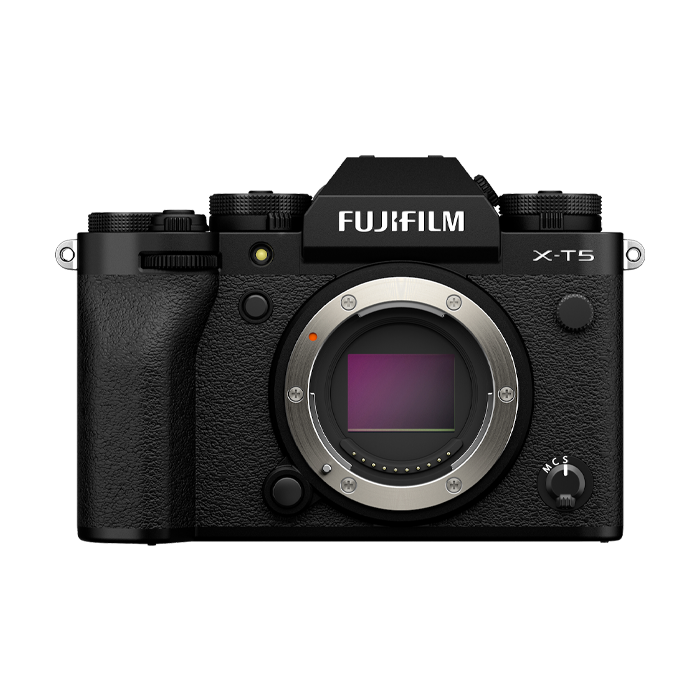
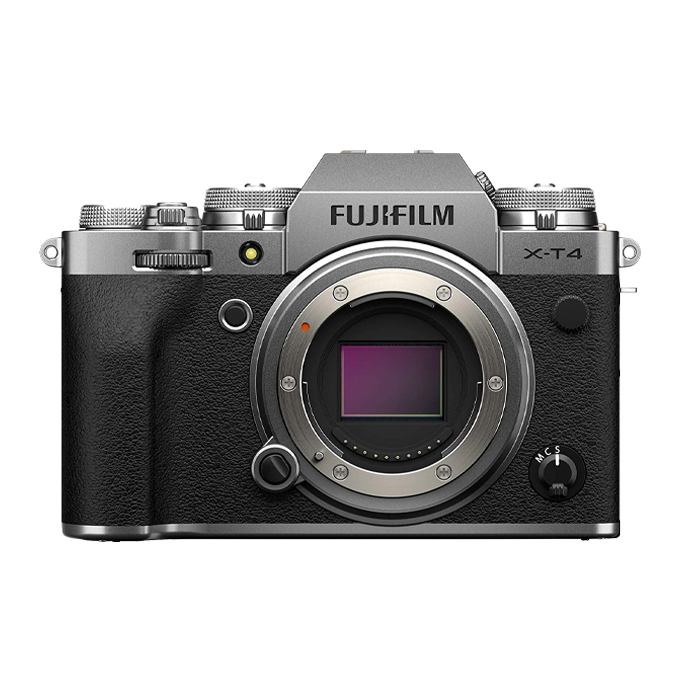
Photographers working in harsh weather: The X-S10 lacks official weather sealing. A weather-resistant body such as the Fujifilm X-T4 or X-T5 may be more suitable for frequent outdoor work, provided it is paired with appropriately weather-resistant lenses.
Photographers who need extensive video features: If 4K/60p recording, longer recording flexibility, or more advanced video options are essential, compare the X-S10 with newer bodies or higher-tier models.
Photographers who require redundant storage: The single card slot is not ideal for professional assignments that require simultaneous in-camera backup. A body with dual card slots offers additional protection against card failure.
Fujifilm retro-dial enthusiasts: If you prefer dedicated physical shutter-speed and ISO dials, consider a model from the X-T series instead.
Buying Recommendation
The Fujifilm X-S10 is worth considering if you want a compact mirrorless camera with strong image quality, in-body image stabilization, a comfortable grip, and capable 4K video. It is particularly appealing to people who prefer conventional PASM controls and want to enter the Fujifilm X-mount system without buying a larger professional body.
When shopping for a used X-S10, inspect the sensor, screen hinge, electronic viewfinder, control dials, buttons, card slot, battery compartment, and connection ports. Test autofocus, IBIS, continuous shooting, and video recording. Check for signs of impact or moisture, and confirm whether a battery, charger, and other accessories are included.
Because the X-S10 has no official weather sealing, pay particular attention to signs of moisture damage if the previous owner used it outdoors. For used bodies, compare the asking price with current listings for similar condition and accessories, and favor sellers who offer a return period or warranty.
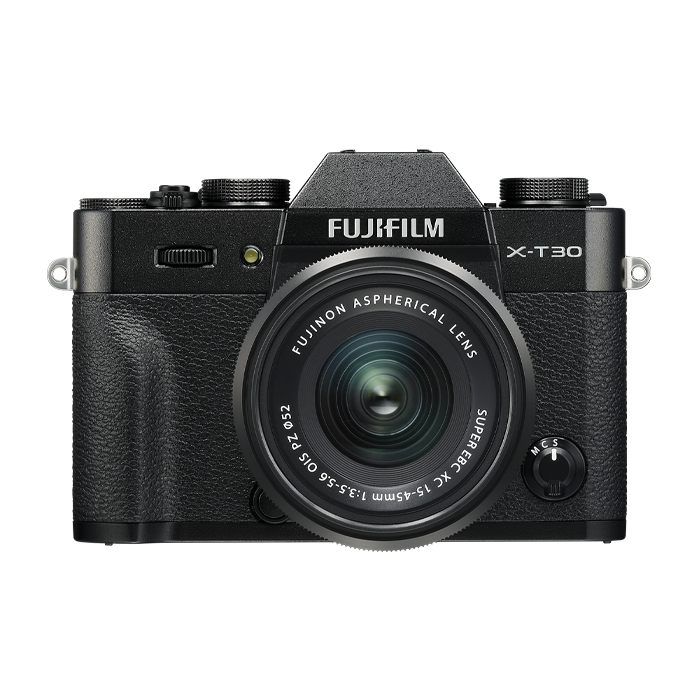
Also compare the total cost against the Fujifilm X-T4, X-T30 II, and newer models. The X-T4 offers weather-resistant construction, dual UHS-II card slots, a larger battery, and 4K/60p recording. The X-S10 remains attractive if you value its lighter body, deep grip, and familiar controls more than those additional features.
Final Verdict
The Fujifilm X-S10 is a versatile APS-C mirrorless camera that combines the image quality of Fujifilm's 26.1MP X-Trans CMOS 4 sensor with effective in-body image stabilization and approachable controls. Its compact size, comfortable handgrip, fully articulating screen, and detailed 4K video make it suitable for travel, everyday photography, portraits, and content creation.
Its main limitations are the absence of weather sealing, a single UHS-I card slot, relatively modest battery life, and autofocus tracking that does not match the most recent camera systems. It also lacks 4K/60p recording, which may matter to creators producing high-frame-rate 4K video.
Overall, the X-S10 is a compelling choice for photographers who want high-quality images and useful video features in a compact, easy-to-operate body. It is especially well suited to enthusiasts, DSLR upgraders, and vloggers. Photographers who need professional backup storage, more advanced wildlife autofocus, or greater weather protection should compare it with higher-tier or newer Fujifilm cameras before purchasing.
Video Reviews
Video Comparisons


Sample Images