Overview
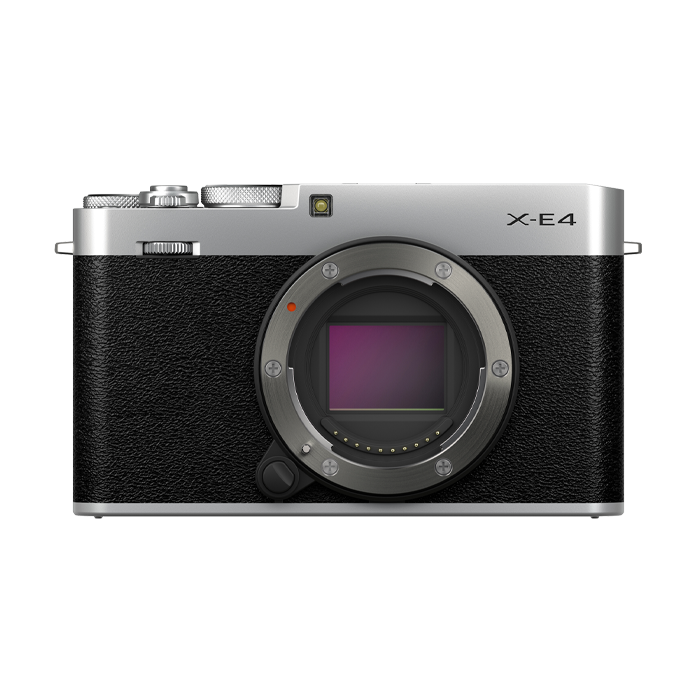
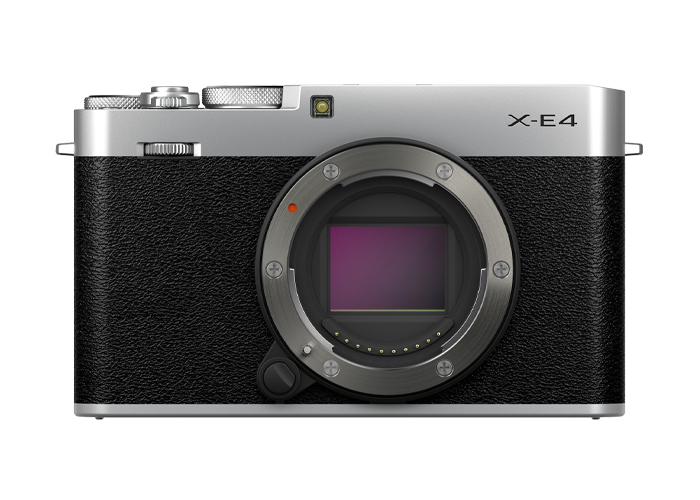
The Fujifilm X-E4 is a compact, rangefinder-style APS-C mirrorless camera designed for photographers who value portability, minimalist styling, and excellent image quality. Its slim, rectangular body and electronic viewfinder positioned in the upper-left corner give it a distinctive appearance, while its interchangeable-lens design offers greater flexibility than a fixed-lens compact camera.
The X-E4 features a 26.1MP X-Trans CMOS 4 sensor and Fujifilm's X-Processor 4 image processor, the same core imaging combination found in the Fujifilm X-T4. This setup delivers detailed photographs, attractive color reproduction, and access to Fujifilm's popular Film Simulation modes. Photographers can create distinctive JPEG images directly in the camera with minimal post-processing.
Despite its small size, the X-E4 supports continuous shooting at up to 8 frames per second with the mechanical shutter and up to 20 fps with the electronic shutter. It also records DCI and UHD 4K video at up to 30p and Full HD slow-motion footage at up to 240p. Its upward-flipping touchscreen is useful for waist-level compositions and self-recording.
However, the X-E4 achieves its compact dimensions by sacrificing several ergonomic and professional features. It has no in-body image stabilization (IBIS), no official weather sealing, and a relatively flat body without a substantial handgrip. Its autofocus works well for many everyday subjects, but photographers who regularly track fast-moving wildlife or sports may prefer a newer camera with more advanced subject recognition.
The X-E4 was discontinued by Fujifilm, and its popularity among compact-camera enthusiasts can influence used-market prices. Before purchasing, compare the asking price with other Fujifilm bodies and compact alternatives to determine whether its size and design justify the cost.
Key Specifications and Features
26.1MP X-Trans CMOS 4 Sensor
The X-E4 uses a 26.1MP APS-C X-Trans CMOS 4 sensor paired with the X-Processor 4. This combination delivers detailed images, appealing color reproduction, and good dynamic range for a camera in this class. Its image quality is comparable to that of the X-T4 when using similar settings and conditions, although the two models differ considerably in stabilization, handling, and other features.
Compact Rangefinder-Style Design
One of the X-E4's defining characteristics is its flat, minimalist body. Weighing approximately 364g with the battery and memory card installed, it is easy to carry throughout the day. The electronic viewfinder sits toward the upper-left corner, allowing photographers to compose images while keeping more of their face clear of the camera's center.
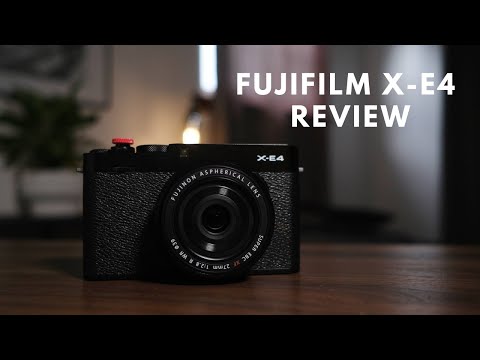
When paired with a compact pancake lens, such as the Fujifilm XF 27mm f/2.8, the X-E4 becomes a highly portable interchangeable-lens camera suitable for street photography, travel, and everyday snapshots. However, the body is not pocket-sized with every lens attached, and its lack of a substantial grip can make larger lenses less comfortable to use.
180-Degree Tilting Touchscreen
The 3.0-inch touchscreen tilts upward for waist-level photography and flips upward by 180 degrees for selfies and vlogging. This provides useful framing flexibility without requiring a fully side-hinged screen. However, the screen can be obstructed by certain accessories mounted on the hot shoe when flipped forward.
Fast Continuous Shooting
The X-E4 supports mechanical-shutter continuous shooting at up to 8 frames per second and electronic-shutter shooting at up to 20 fps. These speeds are useful for street photography, family moments, and everyday action. Electronic shutter operation can introduce rolling-shutter distortion with rapidly moving subjects, and continuous autofocus performance may be less reliable with unpredictable action than that of newer camera systems.
4K Video and Slow Motion
The camera records DCI 4K and UHD 4K video at up to 30p, with detailed footage produced through oversampling from a higher-resolution sensor readout. It supports F-Log recording for users who want more flexibility when color grading compatible footage. Full HD recording at up to 240p is also available for slow-motion effects.
Because the X-E4 lacks in-body image stabilization, handheld video can appear shaky, particularly when walking or using lenses without optical stabilization. A stabilized lens, support equipment, or an external gimbal may be necessary for smoother footage.
Fujifilm Film Simulation Modes
The X-E4 includes 18 Film Simulation modes, giving photographers a choice of distinctive color and tonal styles inspired by Fujifilm's photographic film heritage. Options such as Classic Neg. and Eterna allow users to create stylized photographs and video directly in the camera. Custom settings can also be saved to help maintain a consistent look across a series of images.
Minimalist Controls and Handling
The X-E4 uses a simplified control layout that emphasizes a clean body design. However, it removes the prominent front grip, rear thumb rest, and dedicated physical focus-mode selector found on some other Fujifilm bodies. Photographers accustomed to more substantial camera grips may find it less secure, particularly when shooting one-handed or using larger lenses.
An optional or aftermarket grip and thumb rest can improve handling, although these accessories add bulk and reduce some of the camera's minimalist appeal.
No In-Body Image Stabilization
Unlike the Fujifilm X-T4 and X-S10, the X-E4 does not have sensor-shift image stabilization. When shooting handheld, photographers must rely on suitable shutter speeds, steady technique, or optical image stabilization built into a compatible lens. This limitation is particularly important for low-light photography and handheld video.
Battery Life and Storage
The X-E4 uses the NP-W126S rechargeable lithium-ion battery. Battery life is adequate for casual photography, but carrying a spare battery is advisable for long travel days or extended video sessions. The camera has a single SD card slot supporting UHS-I cards, so it cannot provide simultaneous in-camera backup to a second memory card.
No Official Weather Sealing
The X-E4 does not feature official dust- and moisture-resistant sealing. It is suitable for normal everyday use, but users should protect it from heavy rain, blowing sand, and dusty environments. Its compact design makes it convenient for travel, but it is not intended to replace a weather-sealed camera for consistently harsh outdoor conditions.
Key Specifications
Camera Type | APS-C mirrorless camera |
Sensor | 26.1MP X-Trans CMOS 4 |
Image Processor | Fujifilm X-Processor 4 |
Lens Mount | Fujifilm X mount |
Image Stabilization | No in-body image stabilization |
Mechanical Shutter Burst | Up to 8 fps |
Electronic Shutter Burst | Up to 20 fps |
Video Recording | DCI 4K and UHD 4K at up to 30p; Full HD up to 240p |
Log Recording | F-Log supported |
Autofocus | Hybrid autofocus with phase detection, face detection, and eye detection |
Electronic Viewfinder | Approximately 2.36-million-dot OLED EVF |
Rear Display | 3.0-inch, approximately 1.62-million-dot tilting touchscreen |
Film Simulation Modes | 18 modes |
Memory Card Slot | One SD card slot supporting UHS-I |
Battery | NP-W126S rechargeable lithium-ion battery |
Body Construction | Compact rangefinder-style body without official weather sealing |
Weight | Approximately 364g with battery and memory card |
Release Year | 2021 |
Pros and Cons
Pros | Cons |
|---|---|
Excellent 26.1MP image quality | No in-body image stabilization |
Very compact and lightweight design | Flat body can be difficult to grip securely |
Electronic viewfinder positioned for rangefinder-style shooting | No official weather sealing |
4K video recording at up to 30p | No 4K/60p recording |
Upward-flipping touchscreen for waist-level shooting and selfies | Forward-facing screen can be obstructed by some hot-shoe accessories |
Mechanical shooting at up to 8 fps and electronic shooting at up to 20 fps | Electronic shutter can introduce rolling-shutter distortion |
18 Film Simulation modes for distinctive in-camera color | Autofocus tracking is less advanced than newer subject-recognition systems |
Compatible with Fujifilm X-mount lenses | Large lenses can feel unbalanced on the small body |
Compact pancake lenses create a highly portable camera setup | Single UHS-I card slot without redundant in-camera backup |
Who Should Buy This Lens?
The Fujifilm X-E4 is a camera body, not a lens. It is designed for photographers who want interchangeable-lens flexibility and high image quality in a minimalist, easy-to-carry package. It is particularly suitable for street photography, travel, documentary work, and everyday photography when paired with a compact Fujifilm X-mount lens.
1. Minimalist Street and Everyday Photographers
The X-E4 is especially appealing to street photographers who prefer a discreet camera that does not attract unnecessary attention. Its compact rectangular body, corner-mounted electronic viewfinder, and lightweight construction make it convenient for long walks and everyday shooting.
Pairing it with a compact pancake lens, such as the XF 27mm f/2.8, creates a portable setup for candid street scenes, city walks, cafés, and everyday moments. Its Film Simulation modes also make it easy to create a consistent photographic style without extensive editing.
2. Travel Photographers and Documentarians
Travel photographers who prioritize low weight and a small camera bag may appreciate the X-E4's compact dimensions. The 26.1MP sensor provides enough detail for a wide range of travel images, while the interchangeable-lens mount allows users to choose between compact primes and more versatile zooms.
The camera is best suited to users who can work without IBIS and are comfortable protecting their equipment in poor weather. A lens with optical stabilization can help in certain situations, although it cannot compensate for every kind of camera movement.
3. Photographers Who Enjoy Fujifilm Film Simulations
The X-E4 is a good fit for photographers who enjoy creating distinctive colors and tones directly in the camera. Its Film Simulation modes and customizable image settings allow users to develop a consistent visual style for street photography, travel diaries, portraits, and social media content.
Photographers who primarily share JPEG images may appreciate being able to produce attractive results with less time spent editing RAW files on a computer.
4. Minimalist Solo Content Creators
The upward-flipping touchscreen and 4K recording make the X-E4 suitable for simple vlogging, travel clips, and personal video projects. Its small body is convenient for carrying during trips, and the ability to change lenses provides more creative flexibility than a fixed-lens compact camera.
However, the lack of IBIS means that handheld walking footage may appear shaky. Creators who regularly record themselves while moving may prefer a camera with in-body stabilization or a setup using a stabilized lens or external gimbal.
5. Who Should Consider Another Camera?
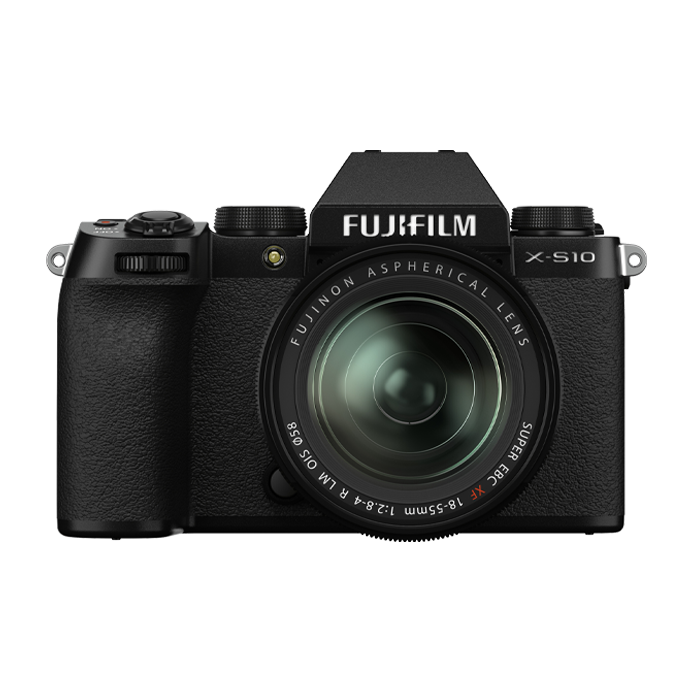
Photographers using large, heavy lenses: The flat body offers limited grip support. Consider the Fujifilm X-S10 or X-T4 if comfort and balance are priorities.
Handheld video creators: The absence of IBIS makes the X-E4 less convenient for recording stable moving footage. The X-S10 or X-S20 offers in-body stabilization.
Wildlife and action photographers: For birds in flight, sports, and unpredictable moving subjects, a newer camera with more advanced subject recognition and tracking may deliver more consistent results.
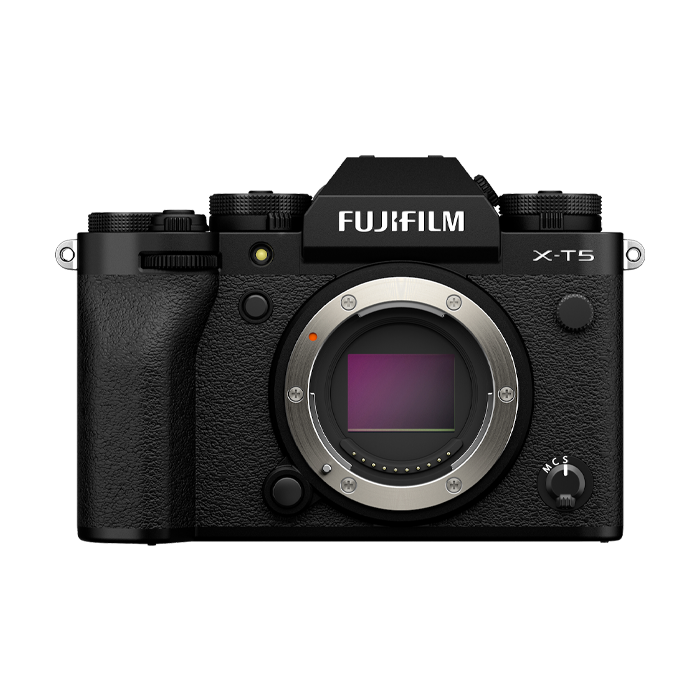
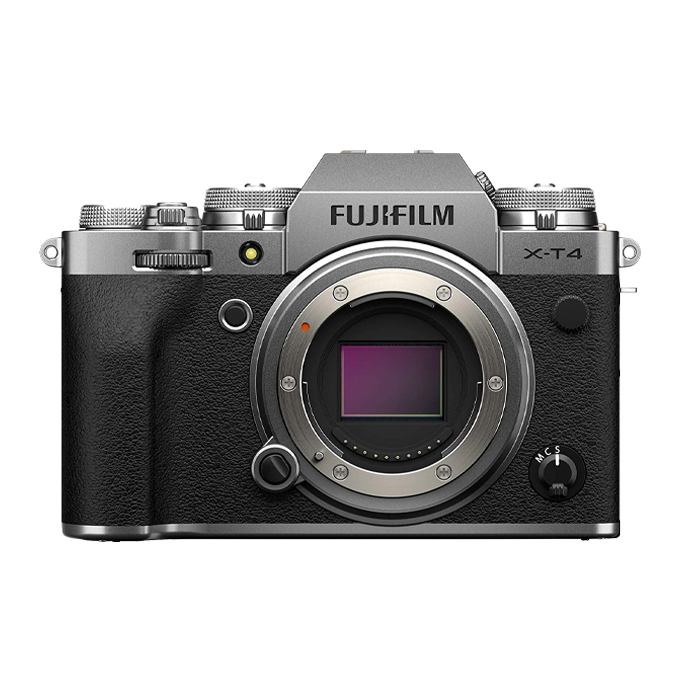
Outdoor photographers working in harsh weather: The X-E4 lacks official weather sealing. A weather-resistant body such as the X-T4 or X-T5 may be more appropriate when paired with a suitably weather-resistant lens.
Professionals requiring backup storage: Its single card slot does not provide simultaneous in-camera backup. A body with dual card slots is preferable for assignments where redundant recording is important.
Buying Recommendation
The Fujifilm X-E4 is worth considering if your priority is a compact, lightweight interchangeable-lens camera with excellent image quality and Fujifilm's distinctive color profiles. Its minimalist design is particularly attractive to street photographers and travelers who want to carry a camera regularly rather than leave a larger system at home.
Before purchasing a used X-E4, inspect the sensor, electronic viewfinder, screen hinge, touchscreen, control dials, buttons, memory card slot, battery compartment, and connection ports. Test autofocus, continuous shooting, and video recording. Check for evidence of impact or moisture damage, and confirm which accessories are included.
Pay special attention to handling before committing to a purchase. If possible, hold the camera with the lens you plan to use. The flat body may feel comfortable with a small pancake lens but less secure with a heavy zoom or large-aperture prime. An aftermarket grip or thumb rest can improve handling, although it adds bulk.
Because the X-E4 has been discontinued and can attract a premium on the used market, compare its asking price with other Fujifilm cameras before buying. The X-S10 provides IBIS and a more substantial grip, while the X-T4 adds IBIS, weather-resistant construction, dual UHS-II card slots, and 4K/60p video. These alternatives may offer better practical value if portability is not your only priority.
For the X-E4, condition, included accessories, and seller reliability are especially important when evaluating a premium used listing. Avoid assuming that discontinued status automatically makes a particular body worth its asking price.
Final Verdict
The Fujifilm X-E4 is a distinctive APS-C mirrorless camera that combines excellent image quality with a minimalist rangefinder-style design. Its 26.1MP sensor, compact body, 4K recording, upward-flipping touchscreen, and Fujifilm Film Simulation modes make it a compelling option for street photography, travel, and everyday creative work.
Its main compromises are the lack of in-body image stabilization, official weather sealing, and a substantial handgrip. It also has only one UHS-I card slot, and its autofocus tracking is less sophisticated than that of newer camera systems. These limitations matter most to photographers who shoot in challenging weather, use heavy lenses, or regularly photograph fast-moving subjects.
Overall, the X-E4 is best suited to photographers who value portability, discreet styling, and image quality over extensive physical controls and professional features. When paired with a compact X-mount lens, it offers a convenient everyday photography system. However, buyers should compare used prices carefully and consider the X-S10, X-S20, or X-T4 if stabilization, handling, or more advanced shooting features are more important than the X-E4's exceptionally compact design.