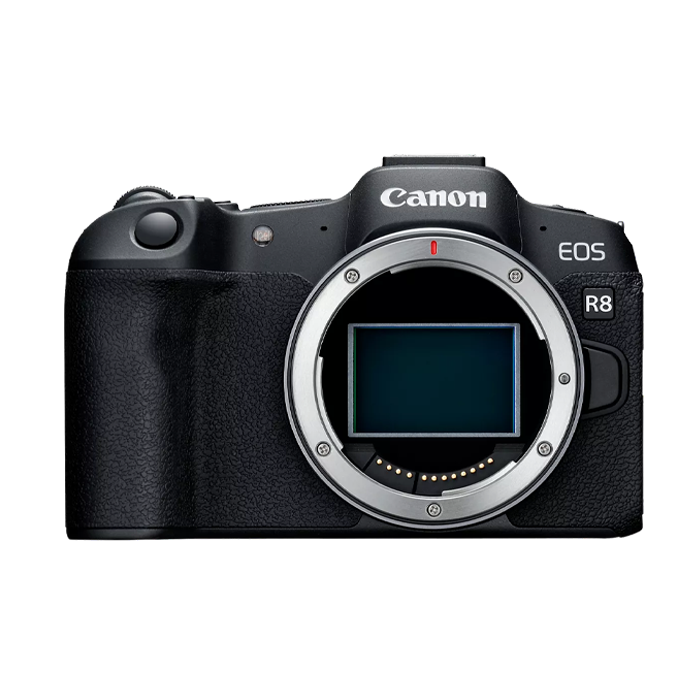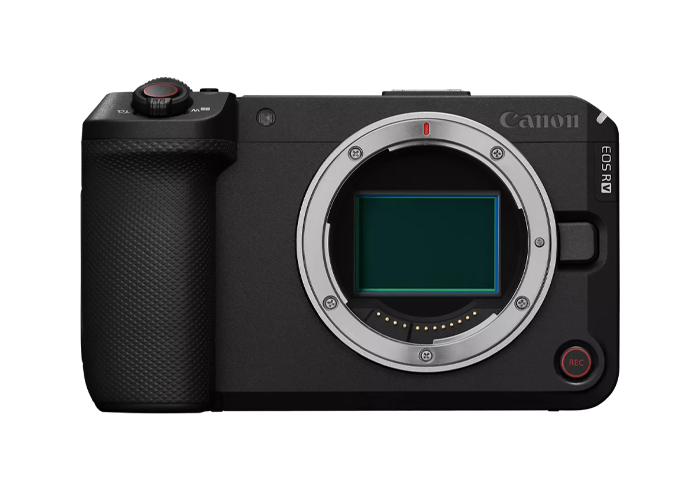
Overview
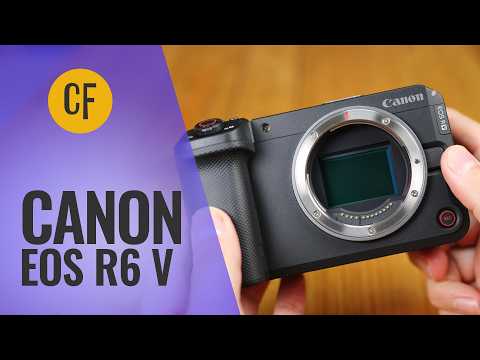
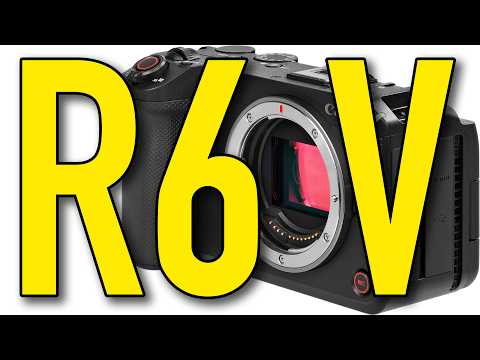
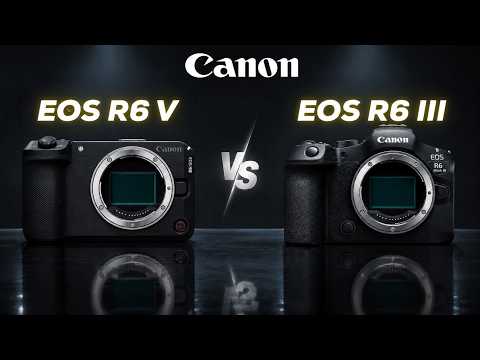
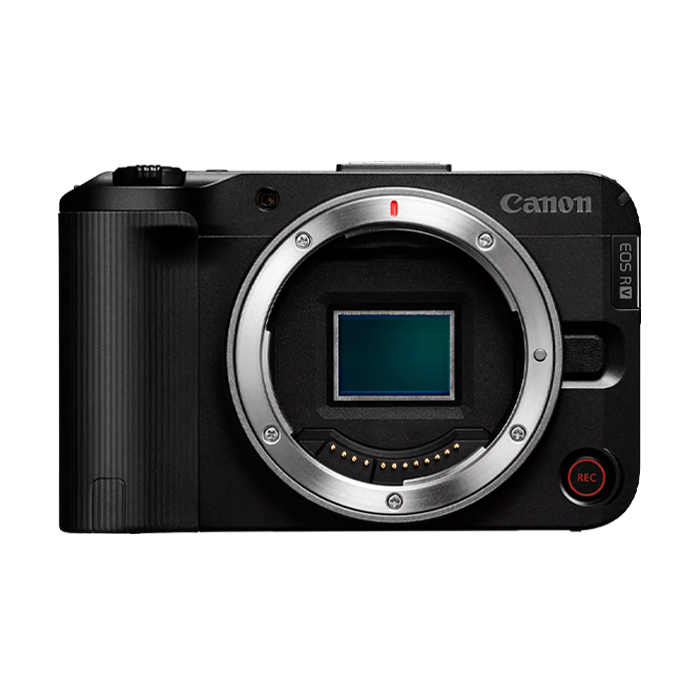
The Canon EOS R6 V is a video-focused full-frame mirrorless camera designed for filmmakers, YouTubers, social media creators, and production teams who prioritize video recording over traditional still photography. Built around a 32.5-megapixel full-frame CMOS sensor and DIGIC X image processor, it combines high-resolution recording, advanced color profiles, and a compact body designed for modern video production.
Unlike a conventional hybrid camera, the R6 V emphasizes long recording sessions, flexible video framing, and solo operation. Its reported 7K Open Gate recording capability allows creators to capture footage that can be reframed for horizontal and vertical platforms during editing. High-frame-rate recording, Canon Log profiles, and professional monitoring tools further support demanding video workflows.
The camera's video-oriented design reportedly includes active cooling, a front-facing recording button, a tally lamp, and controls intended to simplify self-recording. However, the removal of the electronic viewfinder and mechanical shutter makes it less suitable for photographers who frequently shoot fast-moving subjects or rely on conventional flash photography.
Note: The specifications below are based on the supplied product information and should be verified against Canon's official documentation before publication or purchase.
Key Specifications and Features
32.5MP Full-Frame CMOS Sensor
The 32.5-megapixel full-frame sensor is designed to deliver detailed footage, attractive background separation, and flexibility when reframing video. It can also capture high-resolution still images, although the camera's overall design prioritizes video production rather than photography.
7K Open Gate Recording
One of the camera's reported headline features is internal 7K Open Gate recording using a 3:2 image area. This provides additional vertical and horizontal image information, allowing editors to create different aspect ratios from the same recording.
For example, creators can record a scene once and produce a 16:9 YouTube video alongside a 9:16 vertical version for TikTok, Instagram Reels, or YouTube Shorts. This approach can reduce the need to record the same scene multiple times for different platforms.
Canon Cinema RAW Light
Support for 12-bit Cinema RAW Light recording, as specified, offers greater flexibility during post-production. RAW footage can preserve substantial image information for adjusting exposure, color, and tonal details, although file sizes and processing requirements can be considerably higher than those of compressed video formats.
High-Frame-Rate Video Recording
The reported recording options include oversampled 4K Fine at up to 60p, standard 4K at up to 120p, and Full HD at up to 180p. These modes provide flexibility for detailed footage, action sequences, and slow-motion effects.
Actual recording options may vary according to resolution, codec, frame rate, crop, thermal conditions, and other camera settings.
Canon Log 2 and Log 3
Canon Log 2 and Canon Log 3 are designed for filmmakers who want greater control over color grading and highlight and shadow detail. These profiles can be particularly useful when matching footage from multiple cameras or integrating the R6 V into a larger production workflow.
Dual-Base ISO for Video
The supplied specifications list dual-base ISO values of 800 and 6400. Dual-base ISO systems can help filmmakers select a suitable sensitivity range for different lighting conditions while managing image noise. The practical results depend on the recording mode, exposure, and the camera's confirmed sensor implementation.
Built-In Active Cooling
An integrated cooling fan is intended to manage heat during extended video recording. This is particularly valuable for interviews, podcasts, live events, and long-form productions where stopping to cool the camera can interrupt a shoot.
Active cooling can improve recording endurance, but it does not guarantee unlimited recording. Temperature, ambient conditions, power supply, memory card capacity, and selected recording modes can still impose limitations.
Compact, Video-First Body
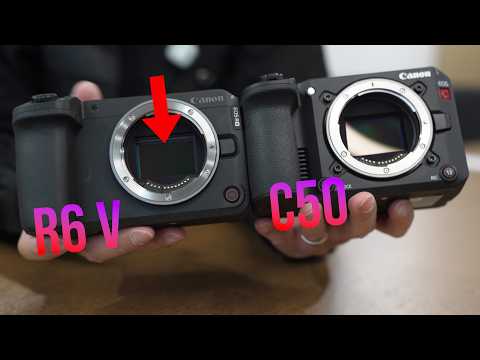
The reported design removes the electronic viewfinder and mechanical shutter to create a compact body dedicated to video production. This can be advantageous for gimbal operation, rig mounting, and productions where the articulating LCD or an external monitor is the primary viewing method.
Vertical Video Controls and Solo Operation
A reported vertical mounting provision, automatic vertical interface layout, front recording button, tally lamp, and dedicated streaming control are intended to simplify operation for creators working alone. These features can help when switching between horizontal and vertical production setups or recording directly in front of the camera.
Image Stabilization
The supplied information lists five-axis in-body image stabilization with up to 7.5 stops of correction. Stabilization can help reduce camera shake when shooting handheld, although its effectiveness depends on the lens, shooting conditions, and selected settings.
For walking shots, wide-angle lenses, or aggressive camera movement, stabilization may still produce unwanted distortion or a jello-like appearance. A gimbal or other stabilization system may be preferable for particularly demanding movements.
Photography Trade-Offs
The reported absence of a mechanical shutter means the camera relies on an electronic shutter for still photography. Depending on sensor readout speed and subject movement, this can increase the risk of rolling-shutter distortion. The lack of a mechanical shutter also affects conventional flash photography and can limit compatibility with certain studio lighting workflows.
Key Specifications
Specification | Canon EOS R6 V |
|---|---|
Camera Type | Video-focused full-frame mirrorless camera |
Sensor | 32.5MP full-frame CMOS |
Image Processor | DIGIC X |
Maximum Open Gate Resolution | 7K, 3:2 aspect ratio, up to 30p |
RAW Recording | 12-bit Canon Cinema RAW Light |
4K Fine Recording | Up to 60p, reportedly oversampled from 7K |
High-Speed 4K Recording | Up to 120p in supported modes |
Full HD Recording | Up to 180p, as specified |
Log Profiles | Canon Log 2 and Canon Log 3 |
Dual-Base ISO | ISO 800 and 6400 |
Cooling System | Built-in active cooling fan |
In-Body Image Stabilization | Sensor-Shift, Up to 7.5 stops |
Electronic Viewfinder | Omitted in the reported video-first design |
Mechanical Shutter | Omitted in the reported design |
Vertical Video Workflow | Vertical mounting provision and orientation-aware controls |
Recording Assistance | Waveform, false color, tally lamp, and front recording control |
Primary Use | Video production, vlogging, streaming, and social media content |
Pros and Cons
Pros | Cons |
|---|---|
7K Open Gate recording offers flexibility for horizontal and vertical video delivery. | High-resolution recording requires substantial storage and capable editing hardware. |
12-bit RAW recording can provide extensive post-production flexibility. | RAW workflows can increase storage costs, transfer times, and editing complexity. |
High-frame-rate 4K and Full HD modes support slow-motion production. | Maximum frame rates may involve mode-specific restrictions or reduced image quality. |
Canon Log 2 and Log 3 provide options for professional color grading. | Log footage generally requires color correction and a suitable post-production workflow. |
Active cooling is designed to support longer recording sessions. | Fan noise, ambient temperature, power, and recording settings may still affect practical operation. |
The compact body is suitable for gimbals, rigs, and mobile production. | The lack of an electronic viewfinder may inconvenience outdoor photographers and some hybrid users. |
Front recording controls and a tally lamp can simplify solo shooting. | A video-oriented control layout may be less convenient for photographers accustomed to traditional camera bodies. |
Vertical workflow features can simplify social media production. | Creators who rarely produce vertical content may gain little from these specialized features. |
In-body stabilization can help reduce handheld camera shake. | Walking footage may still show distortion or movement that requires a gimbal or post-stabilization. |
The full-frame sensor can support detailed footage and shallow depth-of-field effects. | The electronic-shutter-only design can be less suitable for fast action and conventional flash photography. |
Who Should Buy This Camera?
Social Media Creators and Vertical Video Publishers
Creators who publish across YouTube, TikTok, Instagram Reels, and other platforms may benefit from Open Gate recording. Capturing a larger image area can make it easier to produce multiple aspect ratios from a single recording while retaining useful resolution for reframing.
The reported vertical mounting provision and orientation-aware controls may also help creators who frequently switch between horizontal and vertical production.
Solo Filmmakers and YouTubers
Independent creators who manage recording, framing, lighting, and audio themselves may appreciate the front recording button, tally lamp, and video-focused controls. The active cooling system is particularly relevant for long interviews, tutorials, product demonstrations, and other sessions where uninterrupted recording is important.
Podcasters and Long-Form Content Producers
For podcasts, interviews, online courses, and extended presentations, active cooling and professional video monitoring tools can make the camera a useful production option. However, users should verify actual recording limits and plan for reliable power, sufficient storage, and appropriate audio equipment.
Travel Vloggers and Gimbal Operators
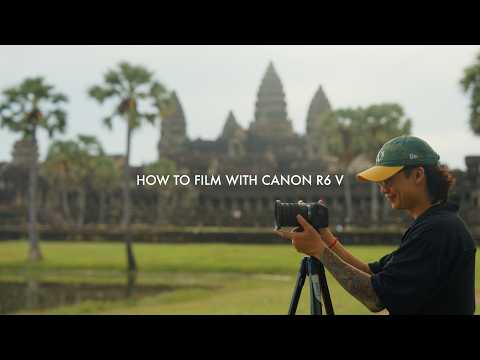
A compact body without an electronic viewfinder may be convenient for travel rigs and gimbal-based filming. Creators who frame primarily through an articulating LCD screen or an external monitor may find this design practical for mobile production.
For walking footage, however, in-body stabilization alone may not eliminate all unwanted movement. A compatible gimbal or other stabilization solution may still be necessary for smooth cinematic shots.
Commercial Videographers and Independent Filmmakers
Creators producing advertisements, branded content, short films, documentaries, and corporate videos may benefit from high-resolution recording and Log-based color grading. These features can provide flexibility when matching footage from multiple cameras or creating different deliverables for clients.
Multi-Camera Production Teams
Production teams may consider the R6 V as a compact secondary camera, provided its recording formats, color response, and available connections meet the project's requirements. Canon Log profiles may help with color matching, but consistent results also depend on exposure, white balance, picture settings, and post-production adjustments.
Photographers Who Occasionally Shoot Video
Photographers who need a camera primarily for still images should evaluate this model carefully. The reported lack of a mechanical shutter and electronic viewfinder may be inconvenient for wildlife, sports, studio flash, and traditional photography workflows. A conventional hybrid camera may be more appropriate when still photography remains the primary purpose.
Buying Recommendation
The Canon EOS R6 V is best considered by creators who prioritize video production and want a camera designed around long recording sessions, flexible framing, and streamlined solo operation.
For social media creators: Look closely at Open Gate recording and the ability to reframe footage for different platforms. These features are most valuable when you regularly publish both horizontal and vertical content.
For long-form video producers: Evaluate the active cooling system, actual continuous-recording performance, power options, and recording limits. Test the camera under conditions similar to your intended production rather than relying solely on advertised maximum durations.
For professional color grading: Confirm the available RAW and Log recording options, codec specifications, supported frame rates, and media requirements. Make sure your computer and editing software can handle the intended workflow efficiently.
For vloggers and gimbal operators: Consider the body's size, screen visibility, mounting arrangements, lens balance, and stabilization performance. A compact camera is only an advantage if the complete lens-and-rig setup works with your equipment.
For photography and video combined: Compare the R6 V with a conventional hybrid camera before buying. The absence of a mechanical shutter and electronic viewfinder may outweigh the specialized video features if you regularly photograph wildlife, sports, or events.
Before purchasing: Verify the official product name, availability, current price, recording specifications, card compatibility, and warranty information through Canon or an authorized retailer. Also account for lenses, memory cards, batteries, audio accessories, and any external monitoring equipment required for your workflow.
Final Verdict
The Canon EOS R6 V, as described in the supplied specifications, is a video-first full-frame camera intended for creators who need flexible recording formats, advanced color grading, and practical tools for solo production. Its reported combination of 7K Open Gate, Cinema RAW Light, high-frame-rate video, and active cooling would address several common requirements in modern content creation.
For social media publishers, Open Gate recording could simplify the production of horizontal and vertical content. For filmmakers and long-form creators, Log profiles, RAW options, and active cooling could provide greater control over recording and post-production workflows.
However, the video-oriented design involves compromises. The reported omission of the electronic viewfinder and mechanical shutter makes the camera less versatile for traditional still photography, while high-resolution RAW workflows can increase storage and editing costs. Stabilization performance and sustained recording capability should also be evaluated in real-world conditions.
Overall, the Canon EOS R6 V is worth considering for creators who put video first and want specialized tools for modern production. Photographers who need a balanced camera for both stills and video should compare it with a conventional hybrid model before making a final decision.