Overview
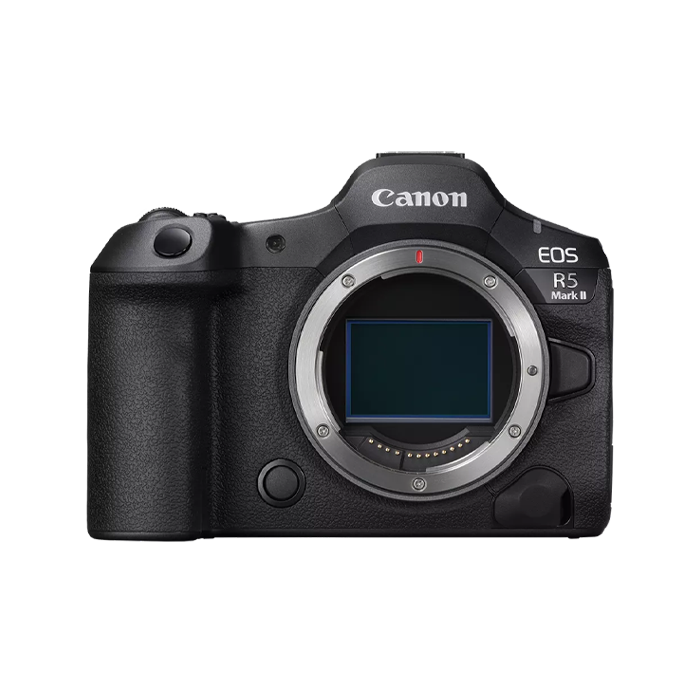
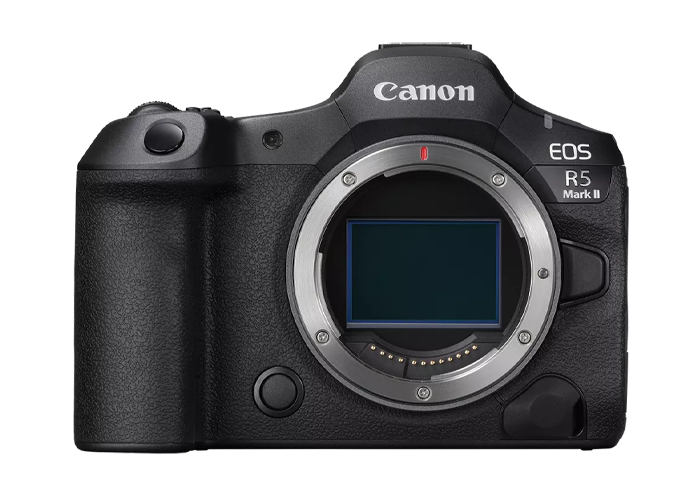
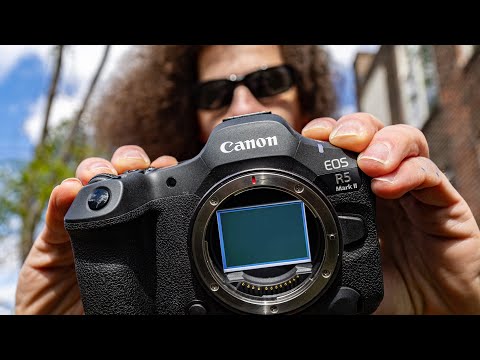
The Canon EOS R5 Mark II is a high-performance full-frame mirrorless camera designed for professional photographers, filmmakers, sports photojournalists, and wildlife specialists. It combines a 45MP back-illuminated stacked CMOS sensor with Canon's DIGIC X image processor and DIGIC Accelerator, delivering high-resolution image quality, rapid sensor readout, and advanced autofocus performance.
Designed as a professional hybrid camera, the EOS R5 Mark II captures detailed still photographs while offering advanced video capabilities, including internal 8K RAW recording and high-frame-rate 4K video. Its intelligent autofocus system introduces Action Priority features for selected sports, Register People Priority for recognizing registered individuals, and improved Eye Control AF for selecting autofocus areas through the electronic viewfinder.
Other important features include continuous electronic shooting at up to 30 frames per second, pre-continuous shooting, advanced in-body image stabilization, and in-camera neural network processing for image upscaling and noise reduction. These capabilities make the camera particularly attractive to professionals who need to capture decisive moments without sacrificing resolution.
However, the EOS R5 Mark II comes with a premium price, demanding storage requirements, and potential thermal limitations during extended video recording. Its high-performance features also depend on compatible batteries, memory cards, and accessories. For photographers who do not need its combination of resolution, speed, and advanced video tools, a less expensive camera may provide better value.
Key Specifications and Features
45MP Full-Frame Stacked CMOS Sensor
The EOS R5 Mark II features a 45MP full-frame back-illuminated stacked CMOS sensor paired with Canon's DIGIC X processor and DIGIC Accelerator. The stacked sensor architecture improves readout speed compared with conventional sensor designs, helping reduce rolling-shutter distortion during electronic-shutter shooting while supporting fast continuous bursts.
The high resolution captures fine details in wildlife, portraits, landscapes, commercial photography, and studio work. It also provides flexibility for cropping images while retaining substantial detail for publication and large-format prints.
High-Speed Continuous Shooting
The camera supports electronic-shutter continuous shooting at up to 30 frames per second with compatible settings and suitable conditions. This makes it useful for sports, wildlife, birds in flight, and other unpredictable subjects. Its fast sensor readout helps reduce rolling-shutter distortion, although some distortion may still occur depending on subject movement and shooting conditions.
Pre-continuous shooting can record up to approximately 15 frames before the shutter is fully pressed when the feature is enabled and compatible settings are used. This helps photographers capture fleeting moments, such as a bird taking flight or an athlete making a decisive move.
Advanced Dual Pixel Intelligent Autofocus
The EOS R5 Mark II uses an advanced Dual Pixel CMOS AF system with subject detection and tracking. Its Action Priority modes are designed to recognize important actions in selected sports, including basketball, soccer, and volleyball, helping prioritize subjects involved in key moments.
Register People Priority can help the camera recognize and prioritize specific registered individuals in suitable shooting situations. These features are particularly useful for professional sports and event photographers who must work quickly in crowded or unpredictable environments.
Eye Control AF
The upgraded Eye Control AF system allows photographers to move the autofocus selection area by looking at a position in the electronic viewfinder. When calibrated and configured correctly, it can provide a fast way to select subjects without relying entirely on the joystick or directional controls. Performance depends on the photographer, calibration, and shooting conditions.
Internal 8K RAW and High-Frame-Rate 4K Video
The EOS R5 Mark II supports internal 8K RAW video recording at up to 60p under supported recording conditions, as well as uncropped 4K video at up to 120p. These capabilities give filmmakers flexibility for high-resolution production, slow-motion footage, and detailed post-production workflows.
Professional video tools include Canon Log 2, waveform monitoring, false color, and proxy recording options. These features help videographers manage exposure, preserve tonal detail, and streamline editing workflows when working on demanding productions.
In-Camera AI Image Processing
The camera includes neural network-based processing tools designed to improve selected images after capture. In-camera upscaling can enlarge compatible JPEG and HEIF images, with output resolution reaching approximately 179MP under supported conditions. Deep-learning noise reduction can also be applied to compatible RAW files.
These tools can be useful when preparing images for large prints or improving the appearance of high-ISO photographs. Results depend on the original image, file format, and processing settings, and upscaling does not recreate genuine optical detail that was never captured.
Advanced In-Body Image Stabilization
The EOS R5 Mark II features five-axis in-body image stabilization rated for up to 8.5 stops of correction under specified conditions with compatible lenses. Coordinated stabilization between the camera body and supported RF lenses can help reduce camera shake when shooting handheld, particularly with still subjects and slower shutter speeds.
Actual stabilization performance varies according to the lens, focal length, shooting technique, and movement of the subject. Image stabilization cannot freeze a moving subject, and it does not replace a tripod or suitable video support in every situation.
Battery Compatibility and Power Requirements
The EOS R5 Mark II is designed to use the LP-E6P battery for its full range of high-performance features. Although certain older LP-E6-series batteries may be physically compatible, available functions and performance can be restricted depending on the battery used. Buyers should check Canon's current compatibility documentation before reusing existing batteries or purchasing replacements.
Memory Cards and Recording Workflow
The camera provides one CFexpress Type B card slot and one UHS-II SD card slot. CFexpress Type B is important for handling demanding high-resolution RAW bursts and supported high-bitrate video modes. The SD slot provides additional flexibility for compatible recording formats and backup workflows.
When recording simultaneously to both cards, write speed and recording settings can affect buffer-clearing time. Professionals who depend on immediate repeated bursts should choose fast, compatible cards and test their preferred recording configuration before important assignments.
Thermal Management for Extended Video Recording
The EOS R5 Mark II includes thermal-management improvements intended to support demanding video recording. Nevertheless, extended high-resolution recording can generate substantial heat, and available recording time varies with resolution, frame rate, ambient temperature, power configuration, and camera settings.
For productions that require lengthy, uninterrupted recording, users should evaluate the camera's recording limits under their actual working conditions. The optional cooling fan battery grip may help in supported configurations, but it should not be assumed to guarantee unlimited recording time.
Key Specifications
Camera Type | Professional full-frame mirrorless hybrid camera |
Sensor Resolution | 45MP full-frame back-illuminated stacked CMOS |
Image Processor | DIGIC X with DIGIC Accelerator |
Lens Mount | Canon RF mount |
Autofocus System | Dual Pixel CMOS AF with advanced subject detection and tracking |
Special Autofocus Features | Action Priority, Register People Priority, and Eye Control AF |
Maximum Electronic Shooting Speed | Up to 30 fps under supported conditions |
Pre-Continuous Shooting | Up to approximately 15 frames before full shutter press with compatible settings |
Maximum Video Resolution | 8K RAW up to 60p under supported recording conditions |
High-Frame-Rate Video | 4K up to 120p |
Professional Video Features | Canon Log 2, waveform monitoring, false color, and proxy recording options |
Image Stabilization | Five-axis IBIS rated up to 8.5 stops under specified conditions |
AI Image Processing | In-camera upscaling and deep-learning noise reduction for supported files |
Memory Card Slots | One CFexpress Type B slot and one UHS-II SD slot |
Battery | LP-E6P recommended for full feature compatibility |
Best For | Professional sports, wildlife, commercial photography, portraits, and advanced video production |
Pros and Cons
Pros | Cons |
|---|---|
45MP stacked sensor combines high resolution with fast readout. | Premium body price makes it a substantial investment. |
Electronic shooting at up to 30 fps supports demanding action photography. | Fast bursts and high-resolution files require suitable memory cards and storage capacity. |
Advanced autofocus includes Action Priority and Register People Priority features. | Advanced autofocus features may require setup and practice to use effectively. |
Eye Control AF can help select focus areas quickly through the viewfinder. | Eye Control AF performance varies between users and requires proper calibration. |
Internal 8K RAW and high-frame-rate 4K video provide extensive production flexibility. | High-resolution recording generates heat and requires substantial storage and processing resources. |
Pre-continuous shooting helps capture unpredictable moments. | Some high-performance features depend on compatible batteries and settings. |
Advanced IBIS helps reduce camera shake with compatible shooting setups. | Stabilization cannot eliminate subject movement or replace all external support. |
In-camera upscaling and noise reduction offer additional image-processing options. | AI processing takes time and cannot fully restore detail missing from the original capture. |
Dual card slots support flexible recording and backup workflows. | Simultaneous recording can be limited by the slower card and chosen recording settings. |
Who Should Buy This Lens?
Although this section is titled “Who Should Buy This Lens?”, the Canon EOS R5 Mark II is a camera body. It is designed for photographers and filmmakers who need high resolution, rapid shooting, advanced autofocus, and professional video capabilities in one system.
1. Professional Sports and Action Photographers
The EOS R5 Mark II is well suited to photographers covering professional sports, competitive events, and fast-moving subjects where timing and autofocus reliability are essential.
Action Priority autofocus: Selected sports modes can help identify important plays and prioritize relevant athletes.
Fast electronic bursts: Shooting at up to 30 fps helps capture brief moments during competition.
Fast sensor readout: The stacked sensor helps reduce rolling-shutter distortion compared with slower-readout sensors.
Eye Control AF: When properly calibrated, it can help move focus selection quickly between subjects in the viewfinder.
2. Commercial, Editorial, and Studio Photographers
The 45MP sensor provides the resolution needed for detailed commercial assignments, product photography, portraits, editorial work, and large-format prints.
High-resolution files: Capture fine details in products, clothing, textures, and portraits.
Cropping flexibility: Retain useful image detail when reframing photographs for different publication formats.
In-camera processing: Upscaling and noise-reduction tools offer additional options for supported images.
Professional workflow: Dual card slots provide flexible recording options for demanding assignments.
3. Wildlife and Bird Photographers
Wildlife photographers can benefit from the combination of high resolution, fast electronic shooting, subject tracking, and pre-continuous shooting. These features are especially useful when photographing birds taking flight, animals changing direction, or brief interactions in the field.
Pre-continuous shooting: Helps capture moments that begin before the photographer fully presses the shutter.
Animal and bird detection: Subject recognition helps maintain focus on wildlife in suitable conditions.
High-resolution cropping: The 45MP sensor provides flexibility when a subject occupies only a small portion of the frame.
Fast burst performance: Helps record several stages of movement for later selection.
For the best results, pair the camera with an appropriate telephoto lens and use fast, compatible memory cards. Dense foliage, low contrast, poor light, and subjects moving unpredictably can still challenge autofocus performance.
4. Professional Filmmakers and Hybrid Creators
The EOS R5 Mark II is designed for creators who need both high-resolution still photography and advanced video recording without maintaining separate camera systems for every assignment.
Internal 8K RAW: Offers extensive detail and post-production flexibility for supported workflows.
4K high-frame-rate recording: Provides options for slow-motion sequences.
Canon Log 2: Supports color grading and tonal flexibility in compatible recording modes.
Exposure monitoring: Waveform and false color tools help evaluate exposure during production.
Proxy workflow: Proxy recording options can simplify editing and collaboration on demanding projects.
5. Who Should Consider Another Camera?
Long-form event videographers: For extended, uninterrupted recording in warm environments, compare the EOS R5 Mark II with the Canon EOS R5 C or a dedicated Cinema EOS model. Check actual recording limits and cooling requirements for the intended workflow.
Budget-conscious photographers: If 45MP resolution, 30 fps shooting, and advanced video features are unnecessary, the Canon EOS R6 Mark II may provide better value.
Photographers who rarely shoot action: A less expensive full-frame camera may deliver excellent image quality without the added cost of the R5 Mark II's specialized features.
Creators with limited storage or computing resources: Large RAW files and high-resolution video require fast storage, substantial disk space, and a capable editing computer.
Buying Recommendation
The Canon EOS R5 Mark II is worth considering if your work demands high-resolution images, fast electronic shooting, sophisticated autofocus, and professional video features in a single camera. Its 45MP stacked sensor and advanced processing architecture make it especially attractive for sports, wildlife, commercial photography, and demanding hybrid assignments.
For professional sports and wildlife photography: The combination of high-speed bursts, subject recognition, pre-continuous shooting, and detailed image files can be valuable when moments are unpredictable and cropping flexibility matters.
For commercial and studio work: The 45MP sensor provides ample detail for large prints, product imagery, portraits, and editorial assignments. The in-camera processing tools can also provide additional options for selected images.
For professional video production: Internal 8K RAW, 4K high-frame-rate recording, Canon Log 2, and monitoring tools offer substantial flexibility. However, consider storage costs, card requirements, heat management, and the expected duration of continuous recordings before committing to this camera.
Before purchasing, confirm current pricing, supported recording modes, battery compatibility, and the memory cards required for your preferred workflow. The price of the body is only part of the investment; high-quality RF lenses, CFexpress cards, backup storage, batteries, and video accessories can add significantly to the total cost.
If you do not need the R5 Mark II's full combination of resolution and speed, compare it with the Canon EOS R6 Mark II. If your priority is extended video recording, evaluate the EOS R5 C or an appropriate Cinema EOS camera based on recording duration, cooling, and production requirements.
Final Verdict
The Canon EOS R5 Mark II is a high-end hybrid mirrorless camera built for professionals who need both detailed photographs and fast, intelligent shooting performance. Its 45MP stacked sensor, electronic bursts of up to 30 fps, advanced subject tracking, pre-continuous shooting, and extensive video features make it a versatile tool for demanding assignments.
Its strengths come with significant costs. The camera requires fast storage and substantial post-production resources, and extended high-resolution video recording may involve thermal limitations. Buyers must also consider battery compatibility and the practical requirements of maintaining a professional camera system.
For sports photojournalists, wildlife specialists, commercial photographers, and hybrid creators who can take advantage of its advanced capabilities, the EOS R5 Mark II offers a powerful combination of resolution, speed, and versatility. For casual photography or video work that does not require these features, a more affordable camera may be the more sensible investment.
Video Reviews


Video Comparisons



Sample Images