Overview
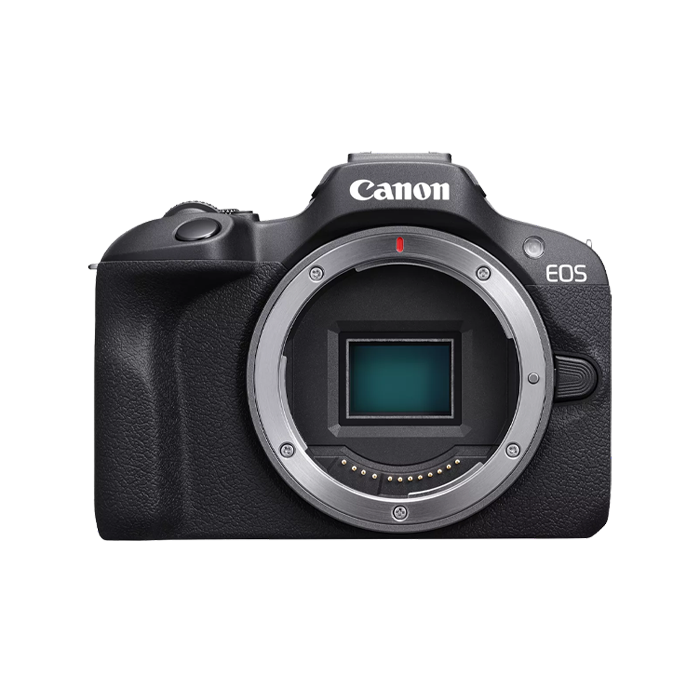
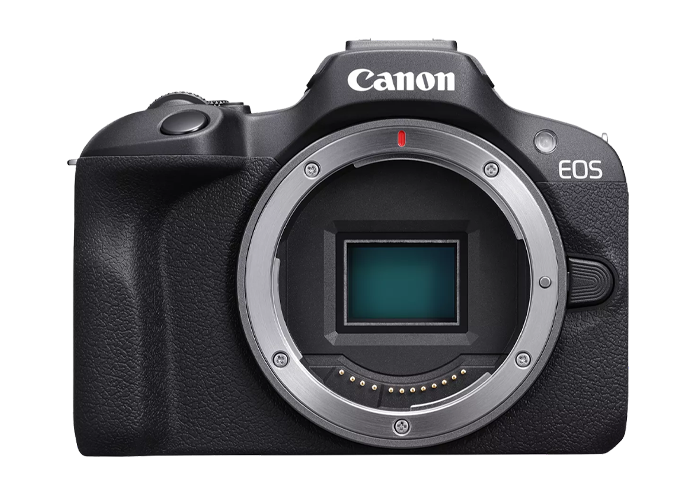
The Canon EOS R100 is Canon's most affordable entry-level APS-C mirrorless camera, designed for beginners, budget-conscious shoppers, students, and casual photographers who want to move beyond smartphone photography. It combines a 24.1MP APS-C CMOS sensor with the DIGIC 8 image processor, providing detailed photographs and access to Canon's RF lens system in a compact, lightweight body.
Designed around simplicity and affordability, the EOS R100 offers a traditional photography experience with a built-in electronic viewfinder, physical controls, and automatic shooting modes. Its autofocus system supports face and eye detection, making it suitable for portraits, family gatherings, travel photography, and other everyday subjects.
However, its low price comes with several compromises. The camera has a fixed, non-touch LCD screen, no in-body image stabilization (IBIS), limited continuous autofocus shooting speed, and cropped 4K video with less capable autofocus performance. These limitations make it less appealing to vloggers, action photographers, and users accustomed to modern smartphone touch controls.
Key Specifications and Features
24.1MP APS-C CMOS Sensor and DIGIC 8 Processor
The EOS R100 features a 24.1MP APS-C CMOS sensor paired with Canon's DIGIC 8 image processor. This combination produces detailed photographs with pleasing color reproduction and provides greater creative flexibility than most smartphone cameras. The APS-C sensor also makes it possible to achieve natural background blur when using suitable lenses, making the camera useful for portraits, family photography, and everyday scenes.
Dual Pixel CMOS Autofocus
The camera uses Canon's Dual Pixel CMOS AF technology for still photography, with face and eye detection to help maintain focus on people. It performs well for portraits, landscapes, and relatively stationary or slowly moving subjects in suitable lighting conditions. However, its older autofocus system lacks some of the advanced subject-recognition and tracking capabilities found in newer models such as the Canon EOS R50 and EOS R10.
Compact and Lightweight Design
Weighing approximately 356g (including battery and memory card), the EOS R100 is easy to carry on vacations, family outings, and daily trips. Its compact body makes it a practical choice for photographers who want an interchangeable-lens camera without carrying a large, heavy setup.
Built-In Electronic Viewfinder
The built-in electronic viewfinder (EVF) allows photographers to compose images while holding the camera to their eye. This is particularly useful outdoors in bright sunlight, when viewing a rear LCD can be difficult. The viewfinder also provides a familiar shooting experience for people transitioning from traditional cameras.
4K Video and Full HD Recording
The EOS R100 records 4K video at up to 24p, but 4K recording applies a significant crop and uses contrast-detection autofocus rather than the camera's Dual Pixel CMOS AF system. This can make it harder to maintain smooth, reliable focus when subjects move. For everyday video, Full HD recording at up to 60p offers a wider field of view and Dual Pixel autofocus, making it a more practical choice for many users.
Fixed 3.0-Inch LCD Screen
The rear 3.0-inch LCD is fixed in position and does not support touch input. All menu navigation and setting adjustments must be performed using the physical buttons. While this design helps keep the camera affordable, it is less convenient for users accustomed to touchscreen focusing, quick menu navigation, and articulating displays for self-recording.
Continuous Shooting Performance
The EOS R100 supports continuous shooting at up to 6.5 frames per second with One-Shot AF and approximately 3.5 frames per second with Servo AF. This is sufficient for casual photography and some predictable movement, but it is less suitable for fast action, sports, or birds in flight where maintaining focus across a long sequence of images is important.
No In-Body Image Stabilization
The EOS R100 does not include sensor-shift in-body image stabilization. Lenses equipped with optical image stabilization can help reduce camera shake when taking photographs or recording video. However, optical stabilization cannot completely eliminate movement caused by walking or rapid camera motion, so additional stabilization may be needed for handheld video.
Affordable RF Lens System
The EOS R100 uses Canon's RF lens mount, allowing it to work with compatible RF and RF-S lenses. Starter kits commonly include the RF-S 18-45mm F4.5-6.3 IS STM lens, which offers a useful everyday zoom range and optical image stabilization. Users can also consider suitable prime lenses, such as the RF 50mm F1.8 STM, for portraits and shallow depth-of-field effects.
Key Specifications
Camera Type | APS-C mirrorless camera |
Sensor Resolution | 24.1MP APS-C CMOS |
Image Processor | Canon DIGIC 8 |
Lens Mount | Canon RF mount |
Autofocus System | Dual Pixel CMOS AF for supported still photography modes; contrast-detection AF in 4K video |
Subject Detection | Face and eye detection, with tracking capabilities depending on the shooting mode |
Maximum Continuous Shooting | Up to 6.5 fps with One-Shot AF; approximately 3.5 fps with Servo AF |
Maximum Video Resolution | 4K UHD up to 24p, with a significant crop |
Full HD Video | Up to 60p |
Rear LCD | 3.0-inch fixed, non-touch screen |
Electronic Viewfinder | Built-in EVF |
Image Stabilization | No in-body image stabilization; compatible lenses may provide optical IS |
Weight | Approximately 356g, including battery and memory card |
Best For | Beginners, family photography, travel, and budget-conscious hobbyists |
Pros and Cons
Pros | Cons |
|---|---|
Affordable entry point into Canon's RF mirrorless system. | Fixed rear LCD does not support touch controls or flexible positioning. |
24.1MP APS-C sensor delivers detailed photographs. | Older DIGIC 8 processor and autofocus technology compared with newer EOS R models. |
Compact and lightweight body is convenient for travel. | No in-body image stabilization. |
Built-in electronic viewfinder is useful in bright outdoor conditions. | 4K video has a substantial crop and less capable autofocus performance. |
Face and eye detection help with portraits and everyday photography. | Continuous autofocus shooting speed is limited for fast-moving subjects. |
Compatible with Canon RF and RF-S lenses. | Limited physical controls and no touchscreen make operation less convenient for some users. |
Starter kits can provide an economical way to begin learning photography. | Less suitable for advanced video production, vlogging, sports, and demanding wildlife photography. |
Who Should Buy This Lens?
Although this section is titled “Who Should Buy This Lens?”, the Canon EOS R100 is a camera body. It is best suited to people who want an affordable, straightforward interchangeable-lens camera for everyday photography rather than advanced video production or demanding action shooting.
1. Casual Family Photographers and Vacationers
The EOS R100 is a practical option for capturing family gatherings, birthdays, holidays, and travel memories without investing in a more expensive camera.
Simple automatic shooting: Scene Intelligent Auto mode helps beginners capture everyday moments without adjusting numerous settings.
Traditional viewfinder: The built-in EVF makes composing photographs more comfortable in bright sunlight.
Good everyday image quality: The 24.1MP APS-C sensor provides detailed photographs suitable for sharing, printing, and editing.
2. Students and Hobbyists on a Tight Budget
For people learning photography, the EOS R100 provides an affordable introduction to interchangeable lenses and the fundamentals of exposure, composition, and lighting.
Lower initial cost: Discounted camera-and-lens kits can offer an economical way to start building a camera system.
Room to learn: Users can explore manual exposure, different focal lengths, and creative depth of field as their skills improve.
Portrait photography: Pairing the camera with a suitable wide-aperture lens, such as the RF 50mm F1.8 STM, can produce attractive background blur.
3. Beginners Who Prefer Traditional Camera Controls
Some photographers prefer looking through a viewfinder and operating physical buttons instead of composing every photograph on a touchscreen. The EOS R100 suits this approach and provides a straightforward introduction to dedicated-camera photography.
Viewfinder-based composition: Useful for outdoor photography and situations where the rear screen is difficult to see.
Basic subject tracking: Face and eye detection can help with portraits and relatively slow-moving subjects.
Interchangeable lenses: Users can expand their creative options without replacing the camera body immediately.
4. Who Should Consider Another Camera?
Smartphone users and vloggers: The fixed, non-touch screen makes framing and self-recording less convenient. Consider the Canon EOS R50 for its articulating touchscreen and more creator-friendly features.
Sports and bird photographers: The relatively slow Servo AF burst rate limits its usefulness for fast-moving subjects. Consider the Canon EOS R10 or EOS R7 for more demanding action photography.
Serious videographers: The cropped 4K mode and contrast-detection autofocus make the EOS R100 less suitable for flexible, professional-style video production.
Photographers who need stabilization: Since the camera lacks IBIS, users who frequently shoot handheld video or in challenging conditions should factor in the cost of stabilized lenses or additional equipment.
Buying Recommendation
The Canon EOS R100 is worth considering if your main priorities are low cost, portability, and straightforward photography. It offers a 24.1MP APS-C sensor, a built-in electronic viewfinder, and access to Canon's RF lens system without requiring a large initial investment.
Canon EOS R100 with RF-S 18-45mm F4.5-6.3 IS STM lens: This is a practical starter kit for family photography, vacations, landscapes, and everyday snapshots. The included lens provides a useful general-purpose zoom range and optical image stabilization.
Canon EOS R100 with 18-45mm and 55-210mm lenses: A two-lens kit can be useful for hobbyists who want to photograph both nearby subjects and more distant scenes. The longer zoom offers additional framing flexibility for travel, outdoor events, and casual wildlife photography.
The prices and stock availability mentioned in the supplied product description may change, so check the retailer's current listing before purchasing. Also confirm the exact camera and lens combination included in the kit.
If the price difference is relatively small, compare the EOS R100 with the Canon EOS R50 before deciding. The R50's newer autofocus features, articulating touchscreen, and improved video capabilities may be worth the additional cost for users who expect to grow beyond basic photography.
Final Verdict
The Canon EOS R100 is a budget-oriented mirrorless camera that provides an affordable way to enter Canon's RF system. Its 24.1MP APS-C sensor, built-in electronic viewfinder, compact body, and simple automatic modes make it suitable for family memories, vacations, portraits, and beginner photography.
Its compromises are substantial but understandable for its price category. The fixed non-touch screen, older autofocus system, limited continuous autofocus shooting speed, lack of IBIS, and cropped 4K video make it less versatile than newer EOS R cameras.
For budget-conscious buyers who primarily take photographs and want a traditional viewfinder-based camera, the EOS R100 can be a sensible starting point, especially when sold in a discounted kit. However, vloggers, smartphone-style touchscreen users, action photographers, and serious video creators should consider the Canon EOS R50, EOS R10, or EOS R7 according to their needs and budget.
Video Reviews


Video Comparisons


Sample Images