Overview
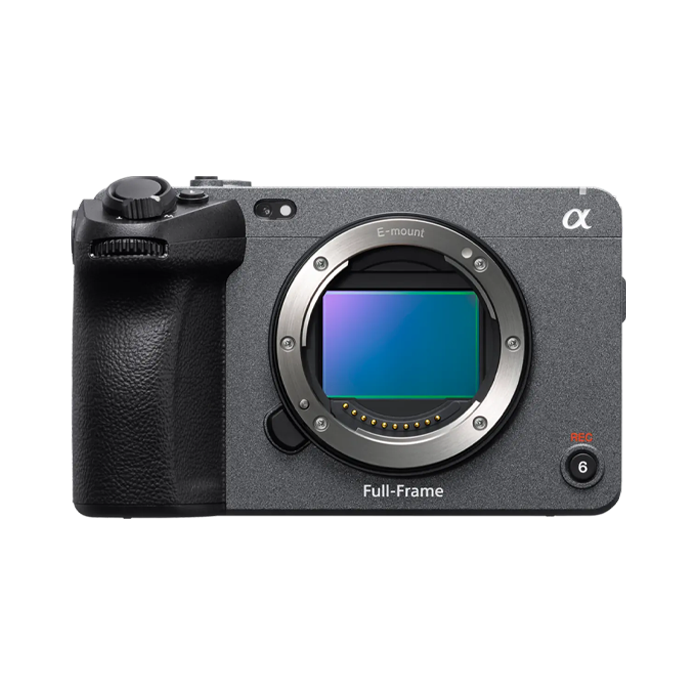
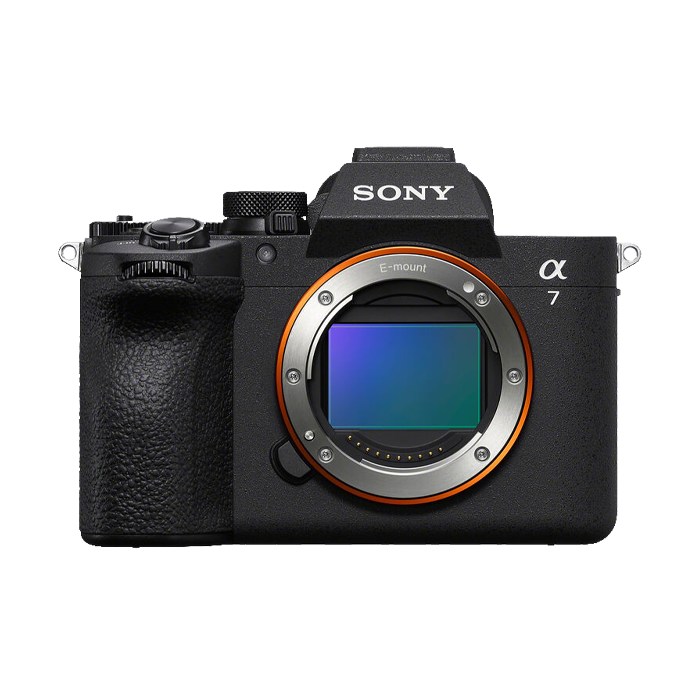
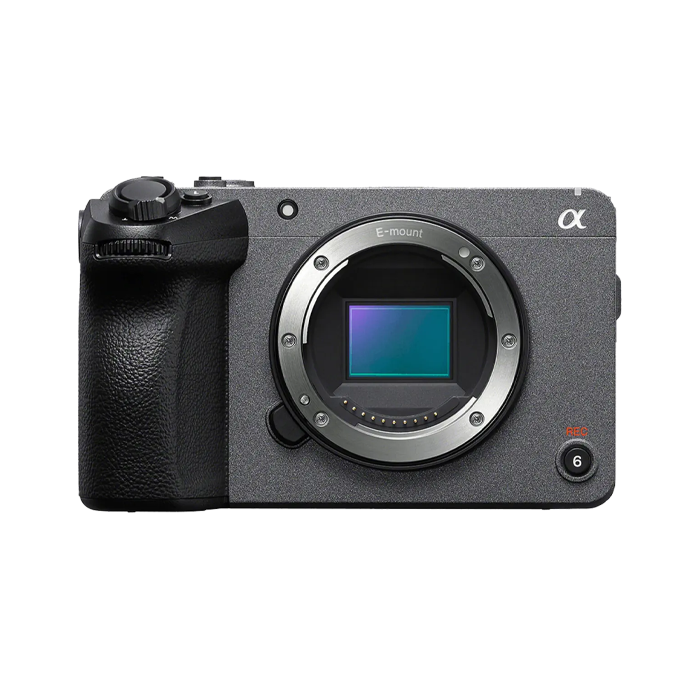
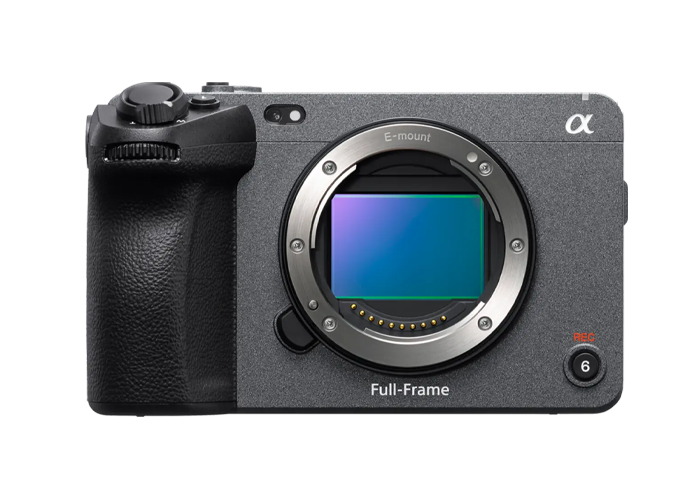
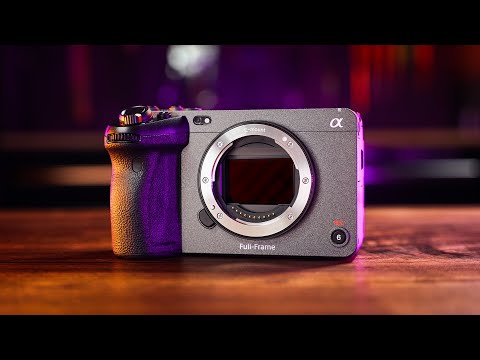
The Sony FX3 (ILME-FX3) is a compact, full-frame cinema camera designed for professional filmmakers, documentary producers, commercial video directors, and solo cinematographers. As part of Sony's Cinema Line, it combines advanced video recording capabilities with a compact body designed for handheld shooting, gimbal operation, and professional production rigs.
The FX3 shares its 12.1-megapixel back-illuminated Exmor R CMOS sensor and BIONZ XR image processor with the Sony a7S III. This combination delivers strong low-light performance, detailed 4K video, and flexible recording options for demanding production environments. It records 4K video at up to 120p with internal 10-bit 4:2:2 recording in supported formats, making it suitable for cinematic slow motion and advanced color grading.
Unlike a traditional mirrorless camera, the FX3 is designed around filmmaking rather than still photography. Its body features multiple accessory mounting points, a built-in cooling fan, tally lights, and an included XLR top handle with professional audio connections. Cinema-oriented features such as Cine EI exposure modes, user LUT support, and timecode compatibility further support professional workflows.
The main trade-offs are its lack of an electronic viewfinder and mechanical shutter, along with its relatively low still-photo resolution. The FX3 is best suited to creators who prioritize video production and professional audio integration over photography features.
Key Specifications and Features
12.1MP Full-Frame Exmor R CMOS Sensor
The FX3 uses a 12.1-megapixel back-illuminated full-frame sensor designed for video capture and strong high-ISO performance. Its relatively low pixel count supports the camera's video-focused design, helping deliver clean footage in challenging lighting conditions. The camera is particularly useful for documentary work, nighttime scenes, interviews, and indoor events where available light is limited.
4K Recording at Up to 120p
The FX3 records 4K video at frame rates up to 120p, allowing filmmakers to create smooth slow-motion sequences. Internal 10-bit 4:2:2 recording is available in supported formats, providing greater flexibility for color correction and grading. Professional recording options include XAVC S-I All-Intra, which can simplify certain editing workflows but requires substantial storage capacity.
High-ISO Performance and S-Log3
The camera is designed for low-light filmmaking and offers Cine EI workflows with base ISO settings of 800 and 12,800 when using S-Log3 in the applicable Cine EI modes. S-Log3 preserves tonal information for post-production grading, while compatible picture profiles and monitoring tools help filmmakers manage exposure. Dynamic range depends on the recording mode, exposure, and measurement method, so a specific number of stops should not be assumed in every situation.
Built-In Cooling Fan
An integrated cooling fan helps manage heat during extended recording sessions. This is especially useful for long interviews, corporate presentations, events, and other productions where interruptions are undesirable. The fan supports extended recording, but actual recording duration can still depend on ambient temperature, settings, media capacity, power supply, and operating conditions.
Five Accessory Mounting Points
The FX3 features multiple 1/4-20-inch mounting points built into its body, allowing compatible accessories such as monitors, microphone receivers, and other rigging equipment to be attached without necessarily requiring a separate cage. This design can reduce setup complexity and help keep a handheld or gimbal-mounted camera compact.
Included XLR Top Handle
The supplied top handle provides two full-size XLR/TRS audio inputs, physical audio controls, and support for 48V phantom power. It allows filmmakers to connect professional microphones directly to the camera, making the FX3 especially useful for interviews, documentaries, and field reporting. The handle also provides a convenient grip for low-angle shooting.
Professional Audio and Timecode Workflows
The camera supports professional audio recording through the XLR handle and can synchronize timecode with compatible equipment using the appropriate adapter cable. Timecode is useful for multicamera productions and external audio recording because it simplifies synchronization during editing.
Cine EI Modes and Custom LUT Support
Cine EI and Cine EI Quick modes support cinema-oriented exposure and monitoring workflows. The FX3 also supports importing compatible user LUTs for monitoring, helping camera operators and directors preview a preferred look while recording in a log profile intended for post-production grading.
Tally Lights and Zoom Control
Recording indicators on the camera help the operator and crew identify when recording is active. The camera also includes a zoom rocker for compatible power-zoom lenses, allowing smoother zoom operation without touching the lens barrel.
Compact Cinema Body
The FX3's compact design makes it suitable for handheld filming, gimbals, travel productions, and tight shooting spaces. Its flat-sided body and built-in mounting points reduce the need for additional rigging hardware, although larger production setups may still require a cage, rods, external monitor, or other accessories.
No Electronic Viewfinder or Mechanical Shutter
The FX3 omits an electronic viewfinder to prioritize its cinema-oriented body design. Filmmakers can compose shots using the fully articulating LCD screen or an external monitor. The camera also lacks a mechanical shutter, making it less convenient for photographers who regularly use it for still photography.
Key Specifications
Specification | Details |
|---|---|
Model | Sony FX3 (ILME-FX3) |
Camera Type | Full-frame Cinema Line camera |
Sensor | 12.1MP back-illuminated Exmor R CMOS |
Image Processor | BIONZ XR |
Maximum Video Resolution | 4K (3840 × 2160) |
Maximum 4K Frame Rate | Up to 120p |
Internal Recording | Up to 10-bit 4:2:2 in supported recording formats |
Recording Formats | Includes XAVC S, XAVC HS, and XAVC S-I options |
Picture Profiles | Includes S-Log3 and S-Cinetone |
Cine EI Base ISO | 800 and 12,800 in applicable S-Log3 Cine EI modes |
Cooling | Built-in cooling fan |
Audio | Included XLR top handle with two XLR/TRS inputs and 48V phantom power support |
Accessory Mounting | Multiple built-in 1/4-20-inch mounting points |
LCD Screen | Fully articulating touchscreen |
Electronic Viewfinder | Not included |
Shutter | Electronic shutter only; no mechanical shutter |
Timecode | Supported with compatible adapter and equipment |
Primary Uses | Professional filmmaking, documentaries, interviews, events, and commercial video production |
Pros and Cons
Pros | Cons |
|---|---|
Excellent low-light video performance | No electronic viewfinder for direct eye-level composition |
4K recording at up to 120p for slow motion | 12.1MP resolution limits still-photo cropping |
Internal 10-bit 4:2:2 recording in supported formats | No 6K or 8K internal recording |
Built-in cooling fan supports extended recording | Recording duration still depends on temperature, power, settings, and media |
Included XLR top handle with professional audio inputs | Top handle adds bulk when a compact or low-profile setup is preferred |
Built-in mounting points reduce the need for a separate cage | Additional monitors, adapters, and accessories can increase total cost |
Cine EI, custom LUT support, and timecode workflows | No mechanical shutter, making it less practical as a dedicated still camera |
Who Should Buy This Lens?
Independent Filmmakers and Commercial Directors
The Sony FX3 is a strong option for independent productions, short films, branded content, and commercial shoots. Its 4K 120p recording, 10-bit 4:2:2 options, and S-Log3 support provide flexibility for slow-motion footage and detailed color grading. Cine EI modes and user LUT support help crews manage exposure and monitor the intended look during production.
Documentary Filmmakers and Run-and-Gun Operators
The compact body, reliable autofocus, built-in mounting points, and included XLR handle make the FX3 useful for mobile documentary work. Operators can connect professional microphones directly to the camera and attach essential accessories without building an elaborate rig. Its low-light capabilities are also helpful when lighting conditions cannot be fully controlled.
Wedding, Event, and Long-Form Videographers
The cooling fan and video-focused design make the FX3 suitable for interviews, conferences, ceremonies, and other long-form recording situations. Its ability to record beyond the traditional 30-minute limit is useful for uninterrupted coverage, although users should still monitor temperature, battery power, storage capacity, and recording settings.
Small Production Teams and Multicamera Crews
Timecode compatibility can simplify synchronization when using multiple cameras or separate audio recorders. The FX3 can serve as a compact A-camera or B-camera in a professional setup, particularly when matching its footage with other compatible Sony Cinema Line cameras.
Who Should Avoid It?
Photographers and hybrid creators who frequently shoot still images may prefer a camera with an electronic viewfinder and a more photography-oriented control layout. The FX3's 12.1MP resolution also limits heavy cropping. The Sony a7S III offers a similar core video sensor and recording capabilities in a traditional mirrorless body with an electronic viewfinder. Budget-conscious filmmakers may also consider the Sony FX30, which uses a smaller APS-C sensor and offers a more affordable Cinema Line alternative.
Buying Recommendation
Consider the Sony FX3 if filmmaking is your primary activity and you need a compact camera with strong low-light performance, professional audio connections, advanced recording formats, and cinema-oriented controls. The included XLR top handle, built-in cooling fan, mounting points, and timecode compatibility can reduce setup complexity and make the camera practical for documentary, event, and commercial work.
Before purchasing, consider the cost of compatible memory cards, lenses, batteries, external monitoring equipment, and storage for high-bitrate footage. Confirm that the camera's recording formats and frame rates meet your production requirements. Extended recording is supported by the cooling design, but no recording duration should be assumed to be unlimited under every environmental condition.
If you need both still photography and video, compare the FX3 with the Sony a7S III and other hybrid cameras. If your main priority is cinema-style operation at a lower cost, the Sony FX30 may be worth evaluating, especially if an APS-C sensor meets your image-quality and depth-of-field requirements.
Final Verdict
The Sony FX3 is a video-first full-frame cinema camera that combines strong low-light performance, 4K recording at up to 120p, internal 10-bit 4:2:2 options, professional audio connections, and a compact body designed for production work. Its cooling fan, built-in mounting points, Cine EI workflows, and timecode compatibility make it particularly useful for filmmakers who need a portable camera that integrates into professional setups.
Its main limitations are the absence of an electronic viewfinder and mechanical shutter, along with its relatively low still-photo resolution and lack of native 6K or 8K recording. These compromises matter less for dedicated video production than they do for hybrid creators. For filmmakers who value mobility, professional audio, and flexible 4K recording, the FX3 remains a capable and versatile Cinema Line camera.
Video Reviews

Video Comparisons
Sample Images