Overview
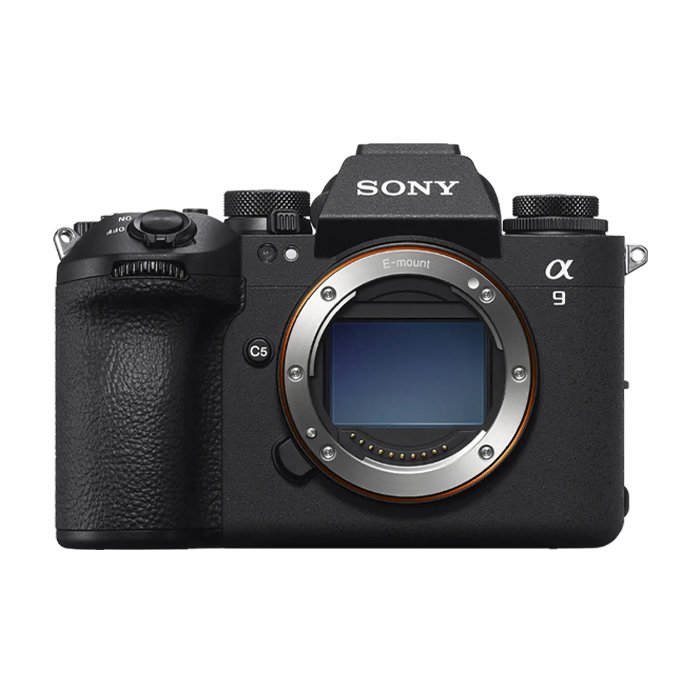
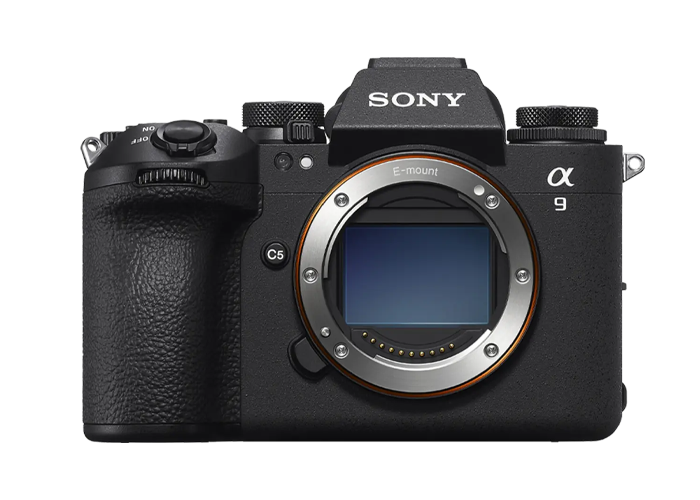
The Sony α9 III (ILCE-9M3) is a professional full-frame mirrorless camera engineered for extreme speed, precise autofocus, and demanding action photography. As the first full-frame interchangeable-lens camera with a global shutter system, it captures the entire image simultaneously rather than reading the sensor line by line. This virtually eliminates rolling-shutter distortion and provides major advantages for photographing fast-moving subjects and working under challenging artificial lighting.
At the heart of the α9 III is a 24.6-megapixel full-frame stacked CMOS sensor paired with Sony's BIONZ XR image processor and a dedicated AI processing unit. The camera can capture images at up to 120 frames per second with continuous autofocus and autoexposure tracking, while its Pre-Capture function can record moments occurring before the shutter is fully pressed.
The global shutter also enables flash synchronization at shutter speeds up to 1/80,000 of a second under supported conditions, giving photographers exceptional control over ambient light and flash exposure. For video creators, the α9 III supports internal 4K recording at up to 120p. Although it is exceptionally capable for action, its 24.6 MP resolution and premium price make it a specialized choice rather than the ideal camera for every photography style.
Key Specifications and Features
24.6 MP Full-Frame Global Shutter Sensor: The sensor captures the entire frame simultaneously, eliminating the characteristic rolling-shutter skew associated with conventional line-by-line sensor readout.
Continuous Shooting at Up to 120 fps: Captures full-resolution still images with continuous autofocus and autoexposure tracking, helping photographers select the decisive moment in fast-moving action.
Pre-Capture Function: Can save images recorded before the shutter is fully pressed, with a configurable buffer of up to approximately one second, depending on the selected settings. This is particularly useful for unpredictable moments such as a bird taking flight.
Global-Shutter Flash Synchronization: Supports flash synchronization at shutter speeds up to 1/80,000 of a second under compatible conditions. This allows photographers to balance flash and bright ambient light without relying on conventional high-speed sync in supported setups.
AI-Powered Autofocus: The dedicated AI processing unit supports subject recognition and tracking for people, animals, birds, insects, cars, trains, and airplanes.
Blackout-Free Viewfinder Shooting: The electronic viewfinder can provide a continuous, blackout-free shooting experience during supported high-speed bursts, helping photographers maintain sight of moving subjects.
Advanced Image Stabilization: The five-axis in-body image stabilization system is rated for up to 8.0 stops under compatible testing conditions, helping reduce camera shake when shooting handheld.
Professional 4K Video: Records 4K video at up to 120p with supported recording settings. It also supports 4K at up to 60p, providing flexibility for slow-motion and standard-speed video production.
Electronic Shutter Advantages: The global shutter avoids the usual rolling-shutter distortion associated with fast-moving subjects and camera panning. Exposure, lighting, and motion can still affect the final image, so good shooting technique remains important.
Dual Memory Card Slots: Two card slots support CFexpress Type A and SD UHS-II cards, providing flexibility for high-speed recording, file management, and professional workflows.
Key Specifications
Specification | Details |
|---|---|
Camera Type | Full-frame mirrorless camera |
Sensor | 24.6 MP full-frame stacked CMOS with global shutter |
Image Processor | BIONZ XR |
AI Processing | Dedicated AI processing unit |
Autofocus | Hybrid phase-detection and contrast-detection AF with AI-based subject recognition |
Maximum Continuous Shooting | Up to 120 fps with AF/AE tracking |
Pre-Capture | Configurable capture buffer of up to approximately 1 second before full shutter release |
Maximum Shutter Speed | Up to 1/80,000 second with the electronic shutter |
Flash Synchronization | Up to 1/80,000 second with compatible flash equipment and supported settings |
Image Stabilization | Five-axis in-body image stabilization, rated up to 8.0 stops |
Electronic Viewfinder | Approximately 9.44-million-dot OLED EVF |
LCD Monitor | 3.2-inch, approximately 2.1-million-dot, vari-angle touchscreen |
Maximum Video Resolution | 4K at up to 120p |
Internal Video Recording | Up to 10-bit 4:2:2 in supported recording modes |
Memory Card Slots | Two hybrid CFexpress Type A / SD UHS-II-compatible slots |
Lens Mount | Sony E-mount |
Pros and Cons
Pros | Cons |
|---|---|
Global shutter virtually eliminates rolling-shutter distortion in still images. | The 24.6 MP resolution provides less cropping flexibility than high-resolution cameras such as the α7R V. |
Up to 120 fps with AF/AE tracking captures extremely fast action. | High-speed bursts generate large numbers of files and require fast, high-capacity memory cards and substantial storage. |
Pre-Capture helps record decisive moments that occur before the shutter is fully pressed. | The feature requires suitable configuration and can increase the number of images that must be reviewed and managed. |
Flash synchronization at very high shutter speeds provides excellent control over bright ambient light. | Compatible flash equipment and settings are required to take full advantage of the high-speed synchronization capability. |
AI-based autofocus and subject recognition support demanding wildlife and sports photography. | Autofocus performance still depends on subject visibility, lighting, lens performance, and shooting conditions. |
Blackout-free shooting helps maintain subject visibility during supported high-speed bursts. | Its specialized speed-focused design and premium price may be unnecessary for general photography. |
Internal 4K recording up to 120p supports high-quality slow-motion video. | Photographers who prioritize maximum resolution, landscape detail, or deep cropping may prefer a higher-megapixel camera. |
Dual memory card slots support flexible professional recording and backup workflows. | The camera and its high-speed workflow require a significant equipment and storage budget. |
Who Should Buy This Lens?
Although the heading says “Lens,” the Sony α9 III is a camera body. It is designed for photographers who need extreme shooting speed, reliable tracking, and precise control over fast-moving action.
Professional Sports Photographers and Photojournalists
The 120 fps continuous shooting capability can capture multiple phases of a fast event, such as a ball making contact with a bat or a runner crossing the finish line.
The global shutter virtually eliminates rolling-shutter skew and can reduce problems caused by certain types of flickering artificial lighting.
Pre-Capture provides an additional opportunity to record brief moments that happen before the photographer fully presses the shutter.
High-speed capture is particularly useful when selecting a decisive frame is more important than maximizing resolution.
Wildlife and Bird Photographers
AI-based subject recognition helps track birds and other animals, including subjects moving unpredictably through complex environments.
Continuous shooting at up to 120 fps can capture fine differences in wing position, takeoff, landing, and other fleeting moments.
Pre-Capture is especially useful when a bird is poised to take flight or another animal is likely to move suddenly.
The 24.6 MP sensor provides less room for aggressive cropping than a high-resolution body, so photographers who frequently photograph distant, small birds should consider their lens reach and cropping needs carefully.
Commercial, Fashion, and Flash Photographers
Global-shutter flash synchronization at very high shutter speeds provides additional flexibility when balancing flash with bright sunlight.
Photographers can use compatible flash equipment to control the subject's exposure while retaining a desired aperture and managing ambient light.
The camera's high-speed capture and lack of conventional rolling-shutter distortion can also benefit specialized commercial shoots involving fast movement.
Professional Event and Action Photographers
The global shutter and blackout-free shooting experience are useful for fast-moving subjects and sequences where uninterrupted viewing matters.
Dual memory card slots support professional file-management workflows.
The high frame rate can be valuable for unpredictable moments, but it also demands disciplined culling, storage, and backup practices.
Who Should Consider Another Camera?
Landscape and studio photographers: The 61 MP Sony α7R V provides substantially more resolution and cropping flexibility for static or carefully posed subjects.
Photographers who prioritize fine detail: A higher-resolution body may be more suitable for large prints, architectural detail, and extensive cropping.
Casual photographers and creators: The α9 III's advanced action features may not justify its premium price if extreme speed is rarely needed.
Photographers with limited storage or editing capacity: Very high frame rates can produce large volumes of images, increasing card, storage, backup, and processing requirements.
Buying Recommendation
The Sony α9 III is worth considering when your work genuinely benefits from global-shutter technology, extremely high burst rates, advanced subject tracking, or high-speed flash synchronization. It is particularly suited to professional sports, action, wildlife, and specialized commercial photography where capturing a precise instant is critical.
Before buying, consider whether 120 fps shooting will materially improve your results. The camera's 24.6 MP resolution is sufficient for many professional applications, but it offers less cropping freedom than higher-resolution alternatives. For distant birds, landscapes, architecture, and studio work where detail is the priority, compare it with the Sony α7R V and other high-resolution bodies.
Also account for the cost of fast memory cards, storage, backup systems, and a computer capable of handling large bursts efficiently. If you regularly use flash outdoors, verify that your flash equipment and triggering system support the synchronization workflow you intend to use.
Final Verdict
The Sony α9 III represents a major development in professional mirrorless camera technology. Its global shutter, up-to-120-fps continuous shooting, Pre-Capture, advanced AI autofocus, and high-speed flash synchronization make it a specialized tool for photographers who need to capture fast action with exceptional timing.
For professional sports photojournalists, wildlife specialists, bird photographers, and commercial shooters, its speed-focused features can provide meaningful advantages in demanding situations. However, its 24.6 MP resolution, premium cost, and substantial file-management demands make it less suitable for photographers whose main priorities are maximum detail, deep cropping, or everyday photography.
If capturing the decisive moment is your highest priority, the Sony α9 III offers a distinctive combination of speed and global-shutter performance. If resolution matters more than speed, a high-resolution camera such as the Sony α7R V may be a better fit.
Video Reviews


Video Comparisons
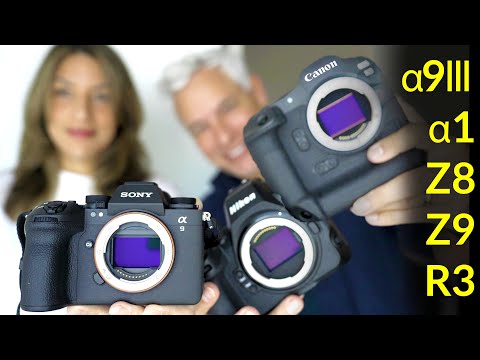
Sample Images